
Cafe cold-pressed juice wholesale is the purchase of bottled, cold-pressed juices for resale, with the aim of adding a convenient drinks option without pressing every order yourself. This 2026 guide explains how to assess suppliers, choose flavours and plan refrigerated stock around the realities of cafe service.
- Cold-pressed juice wholesale for cafes starts with confirmed trade terms, refrigeration requirements and realistic stock planning.
- Home Juice suits cafes evaluating certified-organic cold-pressed juice; confirm wholesale arrangements before committing.
- Start with a small flavour range, then use actual sales and waste records to guide reordering.
- Compare bottled supply with in-house pressing on preparation, cleaning, storage and unsold stock—not ingredients alone.
Why cold-pressed juice matters for cafes
A cafe needs more than a drink that tastes good. You need something staff can serve during the breakfast rush, customers can understand from the label, and your fridge can accommodate alongside food and milk.
Bottled juice separates service from preparation: staff can hand over a sealed bottle rather than wash, cut and press ingredients for each order. The trade-off is stock responsibility. You still need to receive, refrigerate, rotate and sell the bottles within their labelled life.
For your 2026 shortlist, Home Juice offers 100% certified-organic cold-pressed juice, made with no heat and no additives or preservatives. Its 375 ml servings give you a concrete bottle size to assess against your menu and display space.
Home Juice is best for cafes evaluating certified-organic cold-pressed juice in ready-bottled servings. Assess product fit separately from the commercial agreement: confirm trade supply, order requirements and delivery arrangements before treating any retail range as a wholesale solution.
How to choose cold-pressed juice wholesale for your cafe
1. Define the job juice needs to do
Start with your existing menu and a simple spreadsheet. Decide whether bottled juice will serve takeaway customers, accompany breakfast or offer an alternative to your current cold drinks; those uses need different display positions and service routines.
Your first task is not choosing the largest range. It is identifying a clear place for juice in your cafe, so staff know when to suggest it and customers understand what they are choosing.
For a new 2026 menu addition, record enquiries before ordering broadly. A customer asking for orange juice has not necessarily asked for a vegetable blend, and interest in organic ingredients does not establish demand for every flavour.
- Review the cold drinks you already sell and the occasions they serve.
- Note requests for juice that your current menu cannot meet.
- Choose a primary use: takeaway, dine-in or both.
- Identify the fridge position customers will see before ordering.
- Write a short buying brief covering ingredients, bottle size and handling.
2. Compare bottled supply with in-house pressing
Map your current workflow manually before approaching suppliers. Include produce receiving, washing, preparation, pressing, equipment cleaning and waste handling—not just the moment you pour the juice.
In-house pressing gives you control over recipes and preparation. Ready-bottled supply removes those pressing tasks from your service workflow, but introduces supplier coordination and finished-product stock management. Neither approach removes the need for food safety procedures.
Choose the format your team can handle consistently during service. If you already have equipment and trained staff, test whether pressing fits the rush. If bench space is tight, assess whether sealed bottles fit your existing refrigeration instead.
- List every preparation and cleaning task required for in-house juice.
- Check the bench, sink and equipment space those tasks occupy.
- Measure usable refrigerated display space for bottled drinks.
- Assign responsibility for receiving and rotating finished bottles.
- Compare both formats using the same service and waste criteria.
3. Confirm trade terms before choosing a supplier
Create a supplier checklist and request written answers. A retail product page helps you assess the drink, but it does not establish a cafe supply agreement or explain how recurring business orders work.
Home Juice cold-pressed juice offers a ready-bottled route to evaluate rather than adding pressing to your kitchen. Use the contact page to ask about cafe supply, then assess the response against your buying brief rather than assuming wholesale terms from consumer products.
For your 2026 supplier file, keep product specifications and commercial arrangements together. Staff receiving a delivery need handling instructions; the person placing orders needs clear ordering and issue-resolution procedures.
- Ask whether the supplier supports ongoing cafe wholesale orders.
- Confirm minimum order quantities and case configurations in writing.
- Check delivery coverage, receiving requirements and ordering cut-offs.
- Request current ingredient, allergen and nutrition information.
- Confirm labelled shelf life and expected remaining life on receipt.
- Establish how to report damaged bottles or temperature concerns.
4. Build a small, readable flavour range
Start by tasting and reading ingredient lists yourself. A practical trial is 3 flavours with distinct roles: a familiar fruit blend, a vegetable-forward option and a simple single-ingredient choice. This is a starting recommendation, not a claim about what your customers will buy.
Summer Sunset contains carrot, apple, orange and turmeric. Celery Juice contains 100% celery juice. These provide clearly different ingredient profiles to assess, without making claims about health outcomes or assuming either product has agreed wholesale terms.
Home Juice's 375 ml servings also give your team a consistent bottle size to consider. Taste the drinks as customers will receive them, and use the current product label as the source for menu descriptions and dietary information.
- Give each trial flavour a distinct role on the menu.
- Taste chilled samples with the staff who will describe them.
- Write ingredient-led descriptions rather than health promises.
- Check allergen information for each product separately.
- Avoid adding similar flavours until sales justify the extra stock.
The products below are examples for assessing flavour fit, not a substitute for confirming cafe supply arrangements. Compare the actual drinks before deciding which belongs in your fridge.


5. Set up receiving, refrigeration and rotation
Begin with a written receiving checklist and a fridge log. Follow each product's storage instructions and your food safety procedures; cold-pressed describes a production method, not a complete storage or shelf-life specification.
Make the physical workflow easy to follow: Receive, Check, Refrigerate, Rotate. Staff should know where a delivery goes, what to inspect and which bottles to sell first without needing to ask the manager during service.
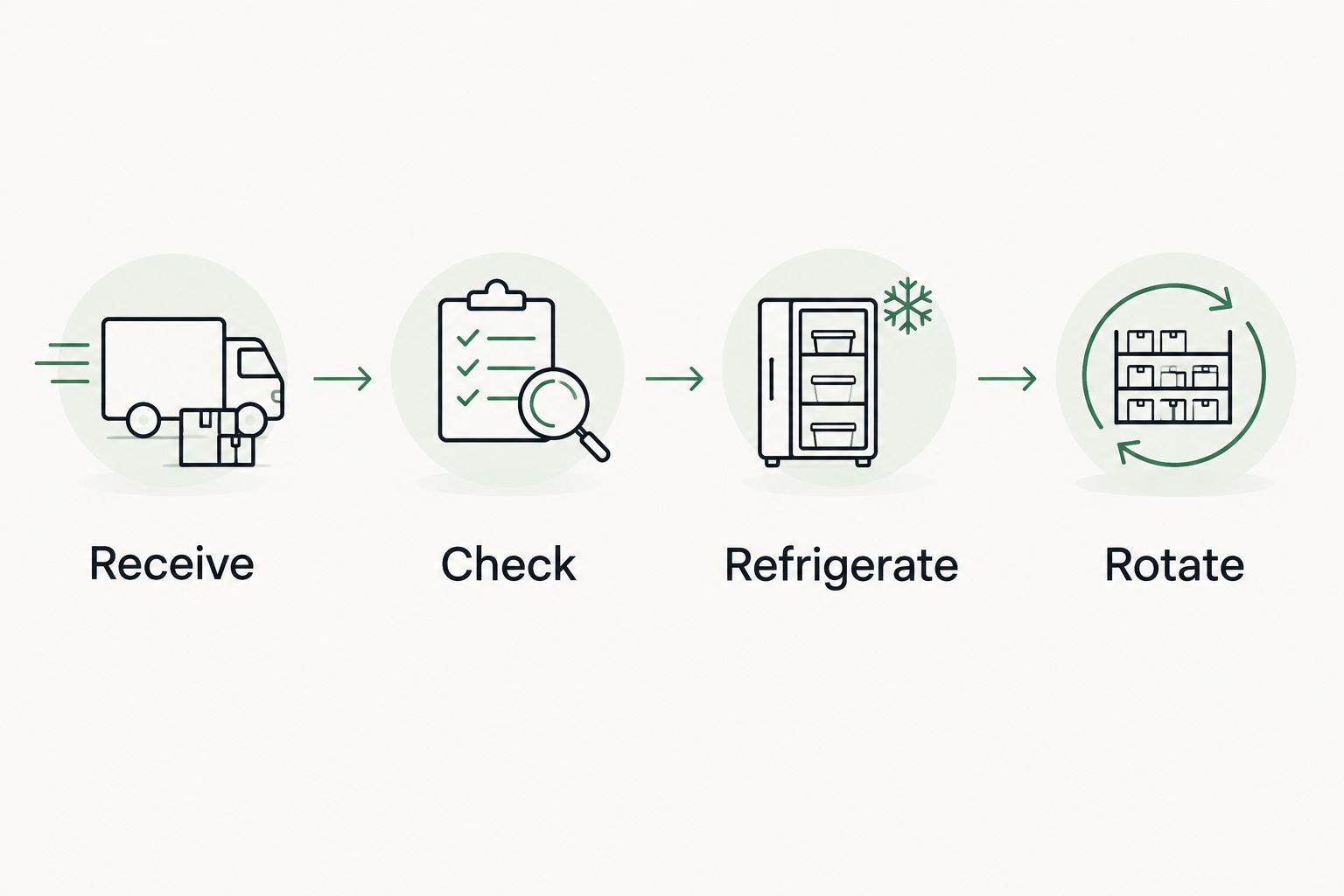
Do not fill every available shelf with a first order. Leave room to access labels, separate incoming stock and rotate bottles without moving unrelated ingredients repeatedly.
- Check packaging condition and labelled dates when stock arrives.
- Follow your documented temperature checks and receiving procedures.
- Move accepted stock into the required refrigerated storage promptly.
- Place earlier-expiring bottles where staff will use them first.
- Keep labels and dates visible during storage and display.
- Follow supplier instructions for opened bottles; do not invent a holding period.
6. Measure sales before expanding the order
Use a spreadsheet or your existing point-of-sale reports before adding another system. Track each flavour separately so a popular fruit blend does not hide slow movement elsewhere in the range.
For an initial check, record 7 trading days of opening stock, receipts, sales and discarded bottles. Continue across different trading patterns before treating that first snapshot as a reliable ordering baseline; a quiet week and an event-heavy week are different operating conditions.
Make your next 2026 order from observed movement and confirmed supplier lead times. Selling more bottles is useful only when you also understand waste, storage demands and the work required to keep the range running.
- Record opening stock and incoming bottles by flavour.
- Separate sold bottles from samples, breakages and expired stock.
- Note customer requests for flavours you do not carry.
- Review which products need repeated staff explanation.
- Adjust quantities before adding more varieties.
- Recheck delivery timing whenever you change your order pattern.
Compare your cafe juice options
Choose the operating model before choosing the widest menu. The best option depends on whether you want recipe control, simpler service or a cautious way to test customer interest.
| Option | Best for | Main advantage | Key limitation |
|---|---|---|---|
| In-house cold pressing | Cafes prioritising control over recipes | You select ingredients and prepare your own blends | Requires suitable equipment, preparation, cleaning and produce management |
| Ready-bottled wholesale supply | Cafes prioritising straightforward service | Removes pressing and bottling from the service workflow | Requires confirmed trade terms, refrigerated storage and careful stock rotation |
| Small retail-product tasting trial | Cafes assessing flavours before a supplier decision | Lets staff compare actual drinks before choosing a range | Does not establish recurring wholesale supply or commercial terms |
| Home Juice product evaluation | Cafes seeking certified-organic bottled juice | Offers cold-pressed juice with no heat, additives or preservatives | Cafe supply arrangements and product-specific handling must be confirmed |
A tasting trial answers whether you like the drink; a supplier agreement answers whether you can operate with it. Keep those decisions separate, even when a product feels like an excellent menu fit.
Common mistakes cafes make
Treating a consumer bundle as a trade agreement
A pack listed online does not establish minimum orders, recurring deliveries or commercial support. Confirm those arrangements directly before printing a permanent menu or promising a continuing range to customers.
Ordering every flavour for the launch
A broad first order splits your attention across more stock lines before you know what sells. Begin with distinct flavour roles, track movement and expand only when you can explain what the next product adds.
Setting the menu from ingredients alone
Ingredients matter, but a cafe also needs readable labels, workable bottle sizes and a clear serving routine. Check how a 375 ml bottle sits in your display and how staff will present it for takeaway and dine-in orders.
Turning ingredient descriptions into health promises
Describe the flavour and ingredients, not an expected change to a customer's body. Organic certification and cold pressing are product attributes; neither justifies a medical claim on your menu, counter sign or staff script.
Assuming every cold-pressed juice has the same shelf life
Do not borrow a storage period from another brand or a general article. Use the specific bottle's instructions and confirmed supplier information when deciding how much to receive, display and reorder.
FAQ
What's the best way to start buying cold-pressed juice wholesale for a cafe?
Start with a short buying brief covering ingredients, bottle size, refrigeration and expected use. Request written trade terms, taste a small range and track sales before expanding your orders.
Does Home Juice offer wholesale juice for cafes?
Confirm cafe wholesale arrangements directly with Home Juice before placing a business supply order. Ask about minimum quantities, delivery coverage, ordering procedures and product-specific shelf life.
Is bottled cold-pressed juice better than making juice in-house?
Bottled cold-pressed juice is better suited to cafes that want to remove pressing and bottling from their service workflow. In-house preparation gives you recipe control but adds equipment, preparation and cleaning responsibilities.
How many juice flavours should a cafe start with?
A practical starting trial is 3 distinct flavours, rather than a large selection of similar blends. Use separate sales and waste records to decide whether to change quantities or add another flavour.
How should a cafe store cold-pressed juice?
Store cold-pressed juice according to the product label, supplier instructions and your food safety procedures. Check deliveries, keep dates visible and rotate earlier-expiring bottles to the front.
What size are Home Juice servings?
Home Juice servings are 375 ml. Assess that bottle size against your fridge space, customer preferences and dine-in or takeaway service before selecting a range.
Can a cafe advertise cold-pressed juice using health claims?
Use ingredient-led product descriptions rather than health promises. Keep staff recommendations focused on flavour, preparation method and verified product attributes, and check that menu wording meets applicable food advertising requirements.
One last thing
Before finalising your 2026 juice range, ask a staff member who did not help choose it to receive, store and describe a bottle using only your written instructions. Any point where they stop to ask a question is a useful place to improve the process.
The most useful first order is one your team can explain, store and track confidently. Start there, then let your cafe's sales guide the next decision.