

Green juice ingredients commonly include leafy greens such as kale or spinach, cucumber or celery, and fruit or citrus to balance the flavour. There is no fixed recipe: apple and pineapple add sweetness, lemon and lime add tartness, and ginger adds warmth. This 2026 guide helps you choose ingredients by taste, whether you are making juice at home or choosing a bottled blend.
- Green juice ingredients usually combine leafy greens, cucumber or celery, and fruit or citrus for balance.
- Kale and spinach bring leafy flavour; pineapple and lime balance sweetness and tartness.
- Homejuice suits shoppers who want ready-made, certified-organic cold-pressed juice rather than preparing ingredients at home.
- Choose by the ingredient list and flavour you enjoy, not by green colour alone.
Which ingredients go into green juice?
Start with vegetables you enjoy, then add ingredients that balance their flavour. Leafy greens give a blend its leafy character, cucumber provides a mild base, and celery brings a more distinctive savoury note. Fruit, citrus, herbs and ginger change the result without being essential to every recipe.
The table below compares common green juice ingredients. These are ingredient choices, not a formula that requires everything in the same glass.
| Ingredient | What it contributes | Best for | Main trade-off |
|---|---|---|---|
| Cucumber | Mild, fresh flavour | A gentle vegetable base | Can taste plain without other ingredients |
| Celery | Distinctive, savoury flavour | People who enjoy a vegetable-led juice | Its flavour can dominate a blend |
| Spinach | Leafy flavour that is generally milder than kale | Beginners trying leafy greens | Still changes the flavour of a fruit-led juice |
| Kale | More pronounced leafy flavour | People who enjoy stronger greens | Can introduce bitterness |
| Apple | Sweetness and familiar fruit flavour | Softening a strongly vegetable-led blend | Moves the taste towards fruit |
| Pineapple | Sweetness with tartness | A bright, fruit-and-greens combination | Can become the main flavour |
| Lemon or lime | Acidity and citrus flavour | Balancing sweetness | Too much makes the juice sharply sour |
| Ginger | Warmth and pungency | People who enjoy a stronger finish | Can overpower delicate ingredients |
| Mint or parsley | Herbal aroma and flavour | Adding a distinct herbal note | Not everyone enjoys herbs in drinks |
Why this matters
A green colour tells you little about how a juice will taste. A leafy blend with pineapple is a different drinking experience from straight celery juice, even though both look green.
When choosing a green juice in 2026, read the ingredients before deciding whether it sounds approachable. Look for familiar flavours first, then check the greens and stronger additions. You do not need to enjoy every vegetable to find a combination you like.
For ready-made options, Homejuice offers 100% certified-organic cold-pressed juices made with no heat, additives or preservatives. Those details describe the ingredients and preparation; your preferred flavour still comes down to what goes into the bottle.
Cucumber and celery: choose your vegetable base
Cucumber and celery can both form part of a green juice, but they are not interchangeable in flavour. Cucumber is the quieter choice. Celery is more recognisable and brings a savoury character that remains noticeable alongside other ingredients.
Best for a gentle starting point: cucumber. Choose cucumber when you want leafy greens, citrus or fruit to remain the main flavour. Its limitation is the same as its strength: a cucumber-heavy combination can feel plain if you want something more distinctive.
Best for a clearly vegetable-led taste: celery. Choose celery because you like celery, rather than because you expect it to disappear into the blend. If its flavour is not for you, adding more ingredients does not automatically make it the right base.
You can also combine cucumber and celery. Keep the decision simple: decide whether you want a mild or savoury starting point before adding leaves, fruit or herbs.
Spinach and kale: choose your leafy character
Spinach and kale are familiar leafy green juice ingredients. Spinach generally brings a gentler flavour, while kale gives a more pronounced leafy taste and can add bitterness. Neither needs to appear in every green juice.
Best for beginners: spinach. Start here if you want to become familiar with leafy flavours without making them the strongest part of the drink. The trade-off is that spinach still has its own taste; it is not an invisible ingredient.
Best for stronger greens: kale. Choose kale when you already enjoy leafy vegetables and want that character in your juice. Pairing it with a familiar fruit or citrus flavour gives you another flavour to work with, but does not remove the kale.
Some recipes use both leaves. That creates another combination to explore, not a requirement for a better juice. If you are making your own, keeping the ingredient list short makes it easier to identify what you enjoy.
Fruit, citrus and ginger: choose your finishing flavours
Apple and pineapple contribute sweetness as well as their own fruit flavours. Lemon and lime contribute acidity. Ginger adds a pungent, warming finish rather than sweetness.
Best for a fruit-forward introduction: apple or pineapple. Either can make leafy ingredients feel more familiar to someone who already enjoys fruit juice. The limitation is that the fruit can become the main taste, so check whether that matches what you want.
Best for a sharper finish: lemon or lime. Citrus creates a different balance from simply adding more fruit. It also makes a blend more sour, so a little restraint helps when you are adjusting a homemade juice.
Best for a stronger finish: ginger. Ginger has a clear presence, even alongside greens and citrus. Leave it out if you want a soft, mild flavour; there is no need to include it just because a recipe suggests it.
Mint and parsley are optional too. Choose them for their flavour, not to make the ingredient list look more impressive.
How do you choose green juice ingredients as a beginner?
Use this simple sequence for your first homemade green juice in 2026. It is a flavour-building method rather than a measured recipe, so follow your juicer's instructions for preparation and suitable ingredients.
- Choose your base. Decide between a mild cucumber-led taste and a more savoury celery-led taste.
- Pick your greens. Start with spinach if you prefer gentler leaves, or kale if you enjoy a stronger leafy flavour.
- Balance the flavour. Add fruit for sweetness or citrus for tartness, according to your preference.
- Taste and adjust. Change one ingredient at a time so you can tell what made the difference.
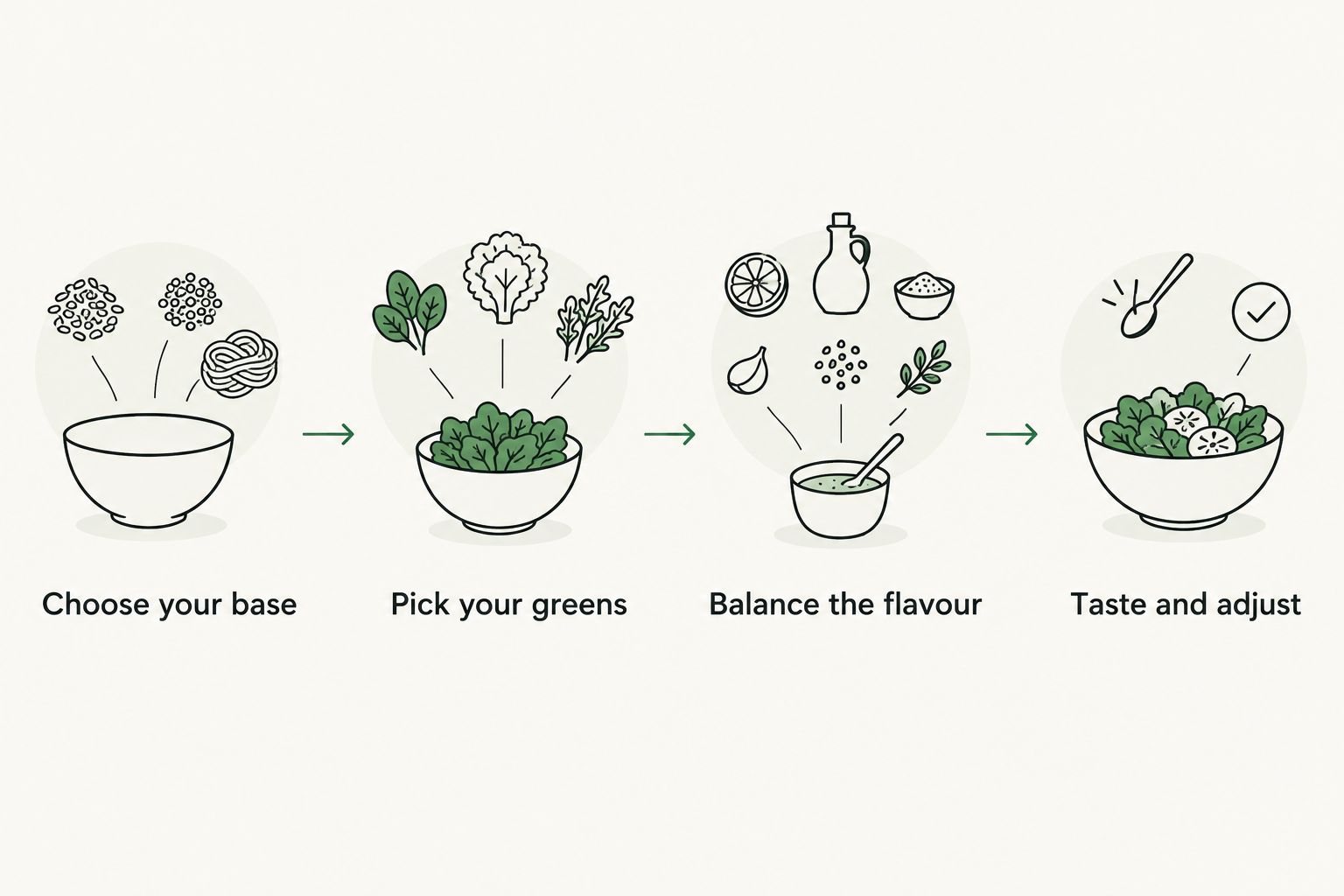
Write down the combination you enjoyed. A short ingredient note is more useful than trying to recreate a successful blend from memory, especially when you have changed the fruit, leaves and citrus together.
Wash produce before preparing it and follow your equipment's guidance. A blender and a juicer also produce different textures: blending keeps the ingredients together, while juicing separates juice from much of the pulp.
Why green juice flavour varies
The same ingredient names do not guarantee the same drinking experience. When comparing green juices in 2026, these factors explain why one combination tastes different from another:
- The vegetable base: cucumber brings a milder flavour than celery.
- The leafy greens: spinach and kale contribute different levels of leafy intensity.
- The fruit: apple and pineapple add their own flavour as well as sweetness.
- The citrus: lemon and lime change how tart the blend tastes.
- The finishing ingredients: ginger, mint, parsley or spirulina introduce another distinct element.
- The balance between ingredients: a pineapple-led blend tastes different from a kale-led blend, even when both contain the same ingredients.
An ingredient list helps you identify what is present, but it is not a tasting note. If a recipe does not state quantities, do not assume you can recreate its exact flavour from the ingredient names alone.
What does a ready-made green juice contain?
A specific product gives you a clearer example than the broad term green juice. Homejuice lists six ingredients in Green Miracle: kale, spinach, cucumber, pineapple, lime and spirulina. That combines leafy greens, a mild vegetable base, fruit, citrus and an additional ingredient rather than relying on green vegetables alone.
Homejuice is best for shoppers who want certified-organic cold-pressed juice without preparing ingredients at home. The convenience is straightforward; the limitation is that a finished recipe does not let you remove an ingredient you dislike.
| Option | Listed ingredients | Best for | Main limitation |
|---|---|---|---|
| Green Miracle | Kale, spinach, cucumber, pineapple, lime and spirulina | People who want a mixed leafy, fruit-and-citrus juice | Not suitable for someone seeking a fruit-free recipe |
| Celery Juice | 100% celery juice | People who want a single-ingredient vegetable juice | No fruit or citrus to soften the celery flavour |
Homejuice's 375 ml servings give you a concrete bottle size to consider alongside flavour. Check the current product details when choosing; a serving size does not tell you the amount of each ingredient in a mixed juice.


Does green juice need fruit?
Green juice does not need fruit. A vegetable-only combination is an option if you enjoy savoury flavours, while apple or pineapple suits someone who prefers a sweeter taste.
Choose according to the flavour you want, rather than treating fruit-free as an automatic improvement. A juice you enjoy and understand is an easier choice than a complicated recipe built around ingredients you dislike.
Does every green juice contain spirulina?
Spirulina is optional, not a defining green juice ingredient. Some recipes include it, while others rely on vegetables, fruit and citrus alone.
Check the ingredient list if you specifically want it included or prefer to avoid it. Do not assume that a dark green colour confirms which ingredients are present.
Is green juice the same as a green smoothie?
Green juice and a green smoothie differ in preparation and texture. A smoothie blends ingredients together and retains their pulp; a juicer separates the liquid from much of that pulp.
Choose juice when you prefer a lighter liquid texture and a smoothie when you prefer a thicker blended drink. The ingredient list and preparation method both matter, so the word green alone does not describe the finished drink.
FAQ
What are the basic green juice ingredients?
Common green juice ingredients include cucumber or celery, leafy greens such as spinach or kale, and optional fruit or citrus. Ginger and herbs are finishing ingredients rather than requirements.
What should I put in green juice if I am a beginner?
Start with familiar flavours and a mild vegetable base such as cucumber. Spinach is generally gentler than kale, while apple or pineapple adds a recognisable fruit flavour.
Can I make green juice without apple?
Yes, apple is optional in green juice. You can choose pineapple for a different fruit flavour or leave fruit out if you prefer a vegetable-led drink.
Is celery juice the same as a mixed green juice?
Straight celery juice contains celery alone, while mixed green juice combines different ingredients. A mixed recipe can include leafy greens, cucumber, fruit, citrus or herbs.
Do I need both spinach and kale in green juice?
No, you do not need both spinach and kale. Choose one according to your taste, or use both when you want a combination of leafy flavours.
Why does my homemade green juice taste bitter?
Strong leafy ingredients such as kale can contribute bitterness to green juice. Change one ingredient at a time to identify the flavour, then adjust the balance to suit your preference.
What should I check on a bottled green juice label?
Check the ingredient list, serving size, storage instructions and use-by information. For your 2026 shopping shortlist, choose by the actual recipe rather than the colour or product name alone.
One last thing
Green does not mean fruit-free. Before choosing your next juice, identify the ingredient that most influences your decision: a fruit you enjoy, a leafy flavour you prefer, or an ingredient you want left out.
That single check makes choosing simpler. You do not need the longest ingredient list; you need a combination that matches your taste.