
Bought cold-pressed juice is better for convenience, while juicing at home is better for choosing your own ingredients and adjusting each batch. Neither option is automatically better in nutritional terms: the ingredients, portion and handling matter more than whether you buy it or make it. For your 2026 routine, the useful comparison is ready-to-drink juice versus the shopping, preparation and washing-up you take on at home.
- Is cold pressed juice better than home juicing? Choose bought juice for convenience and home juicing for recipe control.
- Homejuice cold-pressed juice suits beginners who want certified-organic juice without preparing produce or cleaning a juicer.
- A home cold-press juicer also makes cold-pressed juice; bought versus homemade is a separate choice.
- Compare ingredients, serving sizes and storage instructions rather than assuming either option is nutritionally better.
Is cold-pressed juice better than juicing at home?
Bought juice wins on preparation; home juicing wins on customisation. Cold-pressed describes a processing method, not where the juice is made. You can use a cold-press juicer in your own kitchen, so the two choices are not opposites.
For a ready-made reference, Homejuice offers 100% certified-organic cold-pressed juice made without heat, additives or preservatives. Those are useful product details to compare with your own shopping and preparation preferences, not proof that every bottled juice is better than homemade.
| What matters to you | Bought cold-pressed juice | Juicing at home |
|---|---|---|
| Best for | Avoiding produce preparation and juicer cleaning | Choosing ingredients and changing recipes |
| Main advantage | Juice arrives already prepared | You decide what goes into each batch |
| Main limitation | You choose from existing recipes | You handle shopping, preparation and cleaning |
| Equipment | No juicer needed | A suitable juicer and space to use it |
| Serving size | Check the bottle and nutrition information | Measure the amount you pour |
| Organic ingredients | Look for verified organic certification | Choose certified-organic produce yourself |
| Storage | Follow the product's instructions | Plan preparation, refrigeration and clean containers |
| Variety | Choose from the maker's range | Experiment with ingredients you have |
The right choice is the one whose limitation you are happy to accept. Ready-made recipes remove a kitchen task, while homemade juice gives you more decisions to make.
Why this matters
A juicer can sound like a simple solution until you include the whole job. You need to buy produce, prepare it, assemble the machine, collect the juice and clean the parts afterwards.
Buying juice removes those preparation steps, but it does not remove the need to read labels or plan storage. Your 2026 choice should fit your actual mornings, not an ideal version of them.
Start with the job you want juice to do in your routine. An occasional drink alongside breakfast is a different shopping decision from following a structured juice program, and you do not need a program simply to enjoy cold-pressed juice.
Bought cold-pressed juice: best for less preparation
Homejuice cold-pressed juice is best for beginners who want certified-organic juice without preparing produce or cleaning a juicer. Its verified product details include cold pressing without heat, no additives or preservatives, recyclable packaging and 375 ml servings.
The practical benefit is straightforward: you can choose a prepared drink rather than assemble a recipe. That suits you if making juice is a task you would rather leave out of your day.
The trade-off is less recipe control. You can select a different product, but you cannot remove an ingredient from a juice that has already been made. Read the complete ingredient list before choosing, particularly when you have an ingredient you need to avoid.
What to check before choosing bottled juice
- Ingredients: Choose a recipe you actually enjoy, rather than relying on its name.
- Serving size: Read the nutrition information for the amount you intend to drink.
- Processing: Check the stated method instead of treating every bottled juice as identical.
- Storage: Make sure you can follow the instructions after receiving and opening it.
- Packaging: Check local recycling guidance for the packaging components.
Certification answers a particular question about organic production. It does not tell you whether you will like the flavour or whether the portion fits your plans, so keep those checks separate.
Juicing at home: best for recipe control
Home juicing is the better fit when choosing ingredients is part of the enjoyment. You can leave out a flavour you dislike, change the balance of vegetables and fruit, and make a recipe that matches your preferences.
A home cold-press machine also means you do not have to choose between homemade and cold-pressed. If you already own a juicer, identify its type before comparing your results with a bought product.
The main drawback is the work around the drink. Preparing produce and cleaning equipment remain your responsibility, even when the recipe itself is simple.
Choose home juicing if you enjoy the process, not just the finished glass. A machine you dislike cleaning is a poor fit for a routine you want to keep simple.
Make home juicing easier to assess
Try a recipe using familiar ingredients and pay attention to the whole task. Include washing produce, preparing the machine, dealing with pulp and cleaning the parts—not just the moment the juice comes out.
Notice how much you actually pour, too. A homemade glass has no fixed serving size unless you measure it, so comparing a large glass with a smaller bottle tells you little about the recipes themselves.
Why the better choice varies
There is no single winner for every household in 2026. These practical differences determine which option fits you:
- Preparation preference: Bought juice removes produce preparation; home juicing keeps that work in your kitchen.
- Recipe flexibility: Homemade juice lets you alter ingredients, while bottled juice means selecting from finished recipes.
- Equipment: Home juicing requires a machine, suitable storage space and cleaning according to its instructions.
- Ingredient sourcing: Bought certified-organic juice and homemade juice made with certified-organic produce are different ways to meet that preference.
- Portion planning: A labelled bottle provides a stated volume; a homemade portion depends on what you measure and pour.
- Product variety: A prepared range offers existing combinations, while home juicing lets you experiment with your own.
Choose the factor that causes the most friction in your week. If cleaning is the obstacle, a new recipe will not solve it; if fixed ingredients are the obstacle, a ready-made range needs careful checking.
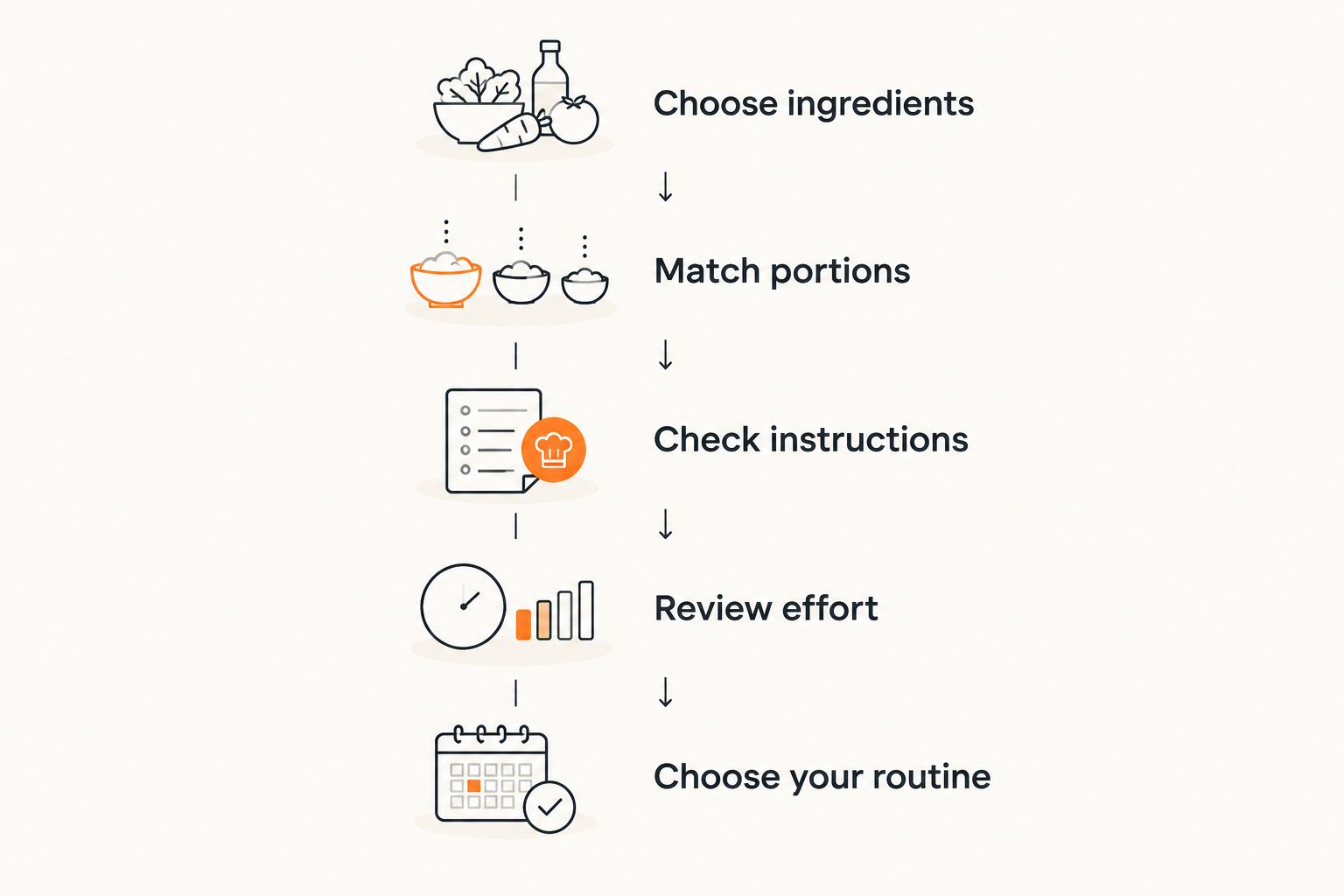
How do you compare the options fairly?
Use the same criteria for bought and homemade juice. This keeps a useful practical decision from turning into an unsupported claim about which method is healthier.
- Choose ingredients. Pick a juice style you enjoy, then compare the ingredient lists rather than unrelated flavours.
- Match portions. Measure your homemade serving against the stated volume of the bought juice.
- Check instructions. Read the bottled product's storage guidance and your juicer's preparation and cleaning instructions.
- Review effort. Include shopping, preparation, washing-up and packing the machine away.
- Choose your routine. Decide which tasks you want to keep and which you want to remove.
For your 2026 comparison, a simple recipe is a useful starting point. Fewer ingredients make it easier to identify the flavour you want and separate recipe preference from preparation preference.
For example, Celery Juice is described as 100% celery juice. It is best for someone seeking a celery-only option; its limitation is equally clear—it will not suit someone who dislikes celery's flavour or wants a mixed-fruit recipe.
You can make the same style of comparison with celery juiced at home. The useful questions are whether you enjoy the drink and whether you want to prepare it yourself, not whether the bottle alone makes it a better choice.
Is cold-pressed juice automatically more nutritious than homemade juice?
No—cold-pressed juice is not automatically more nutritious simply because you bought it. Homemade juice can also be cold-pressed, and two juices with different ingredients are not a like-for-like comparison.
Compare the actual recipe and nutrition information where provided. For homemade juice, keep track of the ingredients you use and the amount you drink rather than assuming a glass has the same composition as a labelled bottle.
Treat the processing method as one product detail, not a complete nutritional verdict. Terms such as organic and cold-pressed describe different things, so one should not stand in for the other.
Does a 375 ml bottle equal a glass of homemade juice?
A 375 ml bottle equals a 375 ml homemade serving by volume, but that does not make the recipes nutritionally identical. The ingredients and their proportions still matter.
If your glass is a different size, measure it before comparing. Matching the volume removes one obvious difference and makes the remaining questions—flavour, ingredients and preparation—easier to judge.
Do seven juices per cleanse day mean you need a juice program?
Seven juices per cleanse day describe Homejuice's program format, not a requirement for enjoying juice. You can compare bought juice with home juicing without choosing a cleanse or replacing your usual meals.
Keep the format separate from the product. A bottle size tells you the volume, a pack tells you what you are ordering, and a program describes a planned arrangement; none automatically establishes what is right for your individual needs.
Can you combine bought juice and home juicing?
Yes—you can use bought juice when you want less preparation and juice at home when you feel like making a recipe. You do not need to turn the choice into a permanent commitment.
For a practical 2026 routine, identify the occasions separately. Perhaps you enjoy preparing juice on an unhurried morning but do not want a machine to clean before leaving for work.
The limitation of a mixed approach is organisation. You still need to check what is in the fridge, follow product instructions and avoid preparing more than you have planned to use.
FAQ
Is cold pressed juice better than home juicing?
Bought cold-pressed juice is better for convenience, while home juicing is better for controlling ingredients. Neither is automatically nutritionally better, and you can make cold-pressed juice at home with a suitable machine.
Can I make cold-pressed juice at home?
Yes, you can make cold-pressed juice at home with a suitable cold-press juicer. Check your machine's stated method and follow its preparation and cleaning instructions.
What's the easiest option if I'm new to juicing?
Bought juice is the easier option if you want to avoid produce preparation and juicer cleaning. Start with a familiar ingredient list and check the serving size and storage instructions before choosing.
Is homemade juice always organic?
No, homemade juice is not automatically organic. If certified-organic ingredients matter to you, choose certified-organic produce for your recipe rather than assuming homemade means organic.
Does cold-pressed mean there are no additives?
No, cold-pressed describes a processing method rather than the complete ingredient list. Check the product's ingredients and stated details separately.
Should I compare a bottle with a full glass of homemade juice?
Compare equal volumes rather than assuming your glass matches the bottle. A 375 ml bottle and a 375 ml homemade serving have the same volume, but their recipes can still differ.
Do I need to choose a cleanse to buy ready-made juice?
No, buying ready-made juice and choosing a cleanse are separate decisions. Select the drink or format that matches what you want rather than assuming a program is necessary.
One last thing
The deciding task is often the washing-up, not the juicing. Before choosing equipment or a prepared pack, picture the moment after you finish your drink: are you happy to clean a machine, or would you rather have avoided that job?
Make that your final 2026 check. A routine that suits your preferences is a better starting point than a promise that one way of making juice is always better.