
Yes, juicing removes much of the fibre from fruit and veg because the pulp is separated from the liquid you drink. Some fibre can remain, but juice does not replace whole produce as a fibre source—even when it is cold-pressed or contains visible pulp.
- Does juicing remove fibre? Yes: much of it stays in the separated pulp rather than the juice.
- Whole fruit and veg retain their edible fibre; unstrained smoothies retain the fibre in their ingredients.
- Homejuice cold-pressed juice suits people wanting a convenient organic drink, not a replacement for fibre-rich food.
- Choose juice for the drink itself, and keep whole produce, legumes and wholegrains in your meals.
Does juicing remove the fibre you need from fruit and veg?
Juicing separates liquid from fibre-containing plant material, so much of the fibre leaves with the pulp. The exact amount remaining depends on the ingredients, equipment and straining. There is no single fibre figure that applies to every juice.
For your 2026 shopping decisions, the useful distinction is not homemade versus bottled. It is whether the edible plant material stays in what you consume.
| Option | What happens to the fibre? | Best for | Main advantage | Main limitation |
|---|---|---|---|---|
| Whole fruit and veg | Fibre stays in the edible portions you eat | Keeping fibre in everyday meals and snacks | No pulp is separated during preparation | Peeling or discarding edible parts removes some fibre |
| Unstrained smoothie | Fibre from the ingredients stays in the drink | A blended option that retains edible pulp | Blending does not separate out the fibre | Straining it afterwards removes fibre-containing material |
| Extracted juice | Much of the fibre stays in the separated pulp | Enjoying a fruit or vegetable drink alongside food | A convenient way to enjoy produce in liquid form | It is not a like-for-like fibre replacement for whole produce |
You can explore Homejuice for organic cold-pressed juice, but choose whole foods when your priority is fibre. Those are different jobs, and your routine can make room for both.
Why this matters
The practical issue is replacement. If you add a juice to breakfast while keeping your usual fibre-containing foods, that is different from replacing the whole breakfast with juice.
Think about what leaves your plate, not just what enters your glass. An apple eaten whole retains its edible flesh and skin; an apple put through an extracting juicer leaves some of that material behind.
You do not need to stop enjoying juice to take fibre seriously. You need to avoid counting it as the equivalent of the whole fruit or vegetables used to make it.
Whole fruit and veg: keep the edible fibre
Whole produce is the clearest choice when retaining fibre is your main goal. Eat the edible flesh, and keep edible skins where appropriate after washing them.
That does not mean every peel belongs on your plate. Remove inedible parts, and choose preparation methods that suit the food rather than trying to eat everything a juicer would discard.
Fresh produce is not your only option, either. Frozen vegetables and suitable canned fruit or vegetables can help you keep whole produce available without needing a fresh shopping trip for every meal.
For a beginner, an easy starting point is to keep the food you already enjoy recognisable: fruit with breakfast, vegetables with lunch, and vegetables or legumes with dinner. You are building a routine, not looking for a perfect ingredient.
Smoothies: retain the pulp if you leave them unstrained
An unstrained smoothie keeps the fibre from the edible ingredients you put into the blender. The blades change the texture; they do not remove the pulp into a separate container.
The ingredients still matter. A smoothie made mainly from juice does not gain the fibre of whole fruit simply because you blend it, while adding whole fruit contributes that fruit's fibre.
Choose an unstrained smoothie when you want a drink that retains edible plant material. Its thicker texture is the trade-off, especially if you prefer a lighter drink.
There is also no need to add every possible ingredient. Start with foods you like, check that the texture suits you, and remember that straining the finished drink changes the fibre picture again.
Extracted juice: enjoy it without counting it as whole produce
Extracted juice is the liquid separated from fruit or vegetables. It can contain some fibre, but its appearance does not tell you how much.
A cloudy drink is not automatically high in fibre, and a thick-looking drink is not a measured fibre serving. Check a stated fibre amount where one is provided rather than making an estimate from colour or texture.
Homejuice cold-pressed juice is best for people seeking a convenient, 100% certified organic drink—not a replacement for fibre-rich meals. Its cold-pressed process uses no heat, and its products contain no additives or preservatives; those features do not establish the amount of fibre in a bottle.
The 375 ml serving size tells you the volume of juice. It does not tell you the grams of fibre, so keep those two measurements separate when comparing drinks.
Why the fibre left in juice varies
There is no reliable universal percentage for fibre removed during juicing. These preparation factors explain why different juices retain different amounts:
- Ingredients: Different fruits and vegetables contain different amounts and types of fibre before processing.
- Edible parts: Removing skins or other edible portions before juicing changes the fibre available at the start.
- Extraction: The equipment separates liquid from plant material, and the amount carried into the juice varies with that separation.
- Straining: Fine filtering removes more suspended plant material than leaving the drink unstrained.
- Pulp handling: Discarding pulp leaves its fibre outside the drink; adding some back returns some of that material.
For your 2026 comparisons, ask what is measured rather than which processing description sounds most reassuring. A fibre figure for the actual drink is more useful than an unsupported claim about what every juicer retains.
Does cold-pressed juice keep more fibre?
Cold-pressing does not, by itself, establish a higher fibre content. It describes an extraction method, not a guarantee that the edible pulp remains in the drink.
Cold-pressed and other extracted juices both separate liquid from solid plant material. To compare their fibre content fairly, you need measured fibre values on the same volume basis.
Organic certification answers another question: how the ingredients were produced under the relevant standard. It does not mean a juice retains the fibre of the whole ingredients.
Does blending destroy fibre?
Blending does not remove fibre when all the edible ingredients remain in the finished drink. The main difference from extraction is that an unstrained smoothie keeps the material a juicer separates out.
Texture changes are not the same as fibre removal. A smooth drink can still contain the blended ingredients' fibre, while straining that drink removes some fibre-containing solids.
If fibre retention is your priority, focus on what goes into the blender and what you discard afterwards. The name of the appliance matters less than that final step.
Can you put juice pulp back into food?
You can use suitable edible juice pulp in food, which returns some of the separated fibre to what you eat. It does not restore the original fruit or vegetable's structure, and the amount of fibre depends on the pulp used.
Vegetable pulp can suit soups, sauces or savoury baking. Fruit pulp can suit porridge or baking when its flavour and texture fit the recipe.
Use only pulp from edible, properly prepared ingredients, and follow normal food-storage and cooking practices. Do not treat pulp reuse as a reason to include inedible skins, stones or other parts you would normally discard.
How much fibre should you plan for in 2026?
Australia's National Health and Medical Research Council Nutrient Reference Values set an adequate intake of 25 g of fibre per day for adult women and 30 g of fibre per day for adult men. These are general adult reference values, not personalised targets for every life stage or circumstance.
Use these figures as context, not as a reason to assign an assumed fibre value to juice. Without a stated amount for the drink, you cannot calculate its contribution accurately.
Your whole day's food matters more than whether one drink contains some pulp. Wholegrains, legumes, vegetables, fruit, nuts and seeds give you several places to include fibre rather than asking juice to do the job alone.
If you have been given individual dietary advice, follow that advice instead of changing your intake to match a general article. Increase fibre gradually rather than making a sudden, large change.
A simple way to keep fibre alongside juice
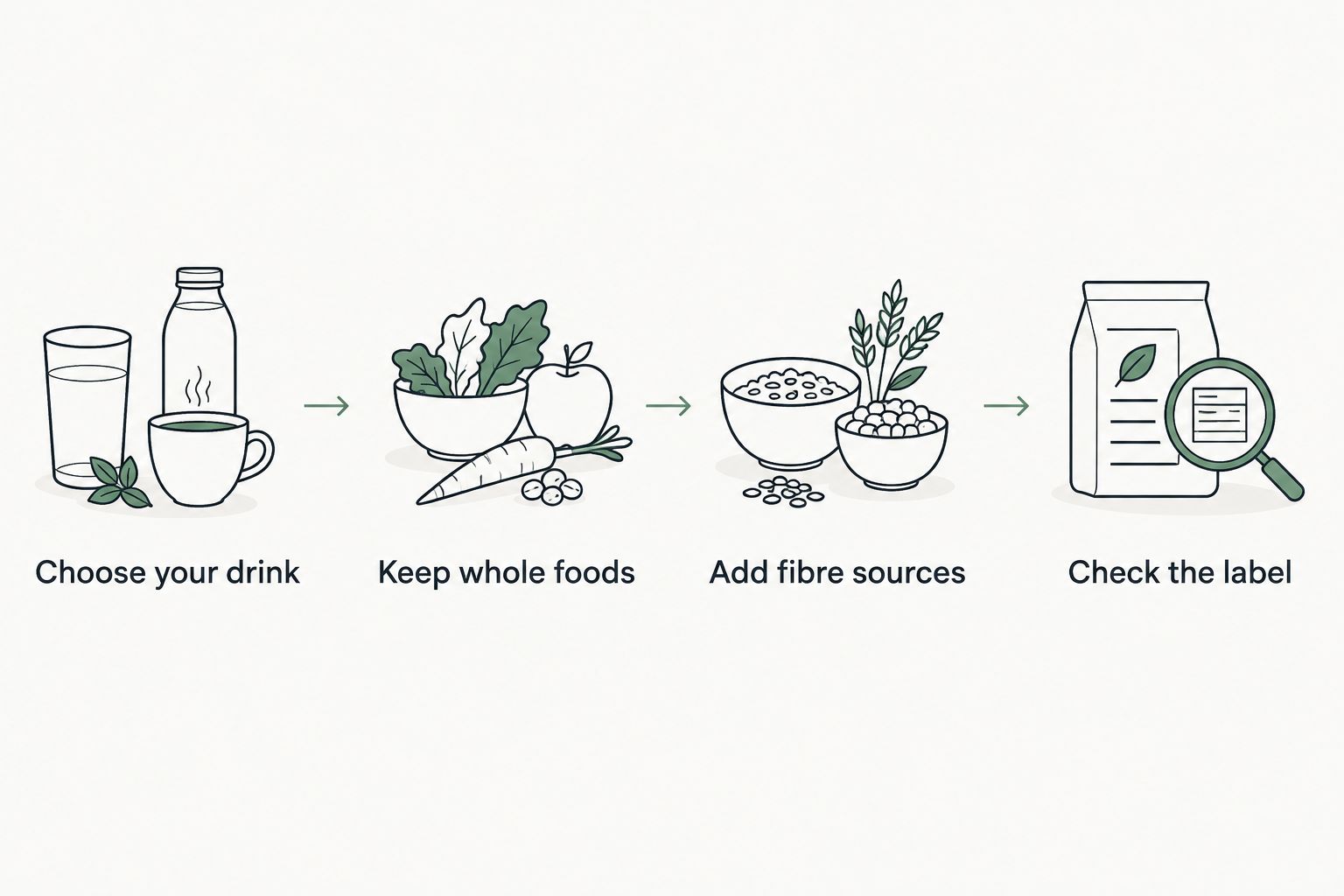
You do not need a complicated meal plan. Use this 2026 checklist to decide where a juice fits without quietly removing the foods you wanted to keep.
- Choose your drink. Decide whether you want extracted juice or an unstrained smoothie. Choose for the experience you want, not an assumed fibre benefit.
- Keep whole foods. If juice replaces whole fruit at breakfast, find another place for that whole fruit rather than counting the two as interchangeable.
- Add fibre sources. Include foods such as oats, wholegrain bread, beans, lentils or vegetables across meals you already eat.
- Check the label. Look for a stated fibre quantity where available, and check whether the figure applies per serving or per 100 ml.
The aim is a routine you can repeat. A juice with a meal containing wholegrain toast and fruit has a different fibre context from juice standing in for all of that food.
What if you are considering a juice-only programme?
A juice-only programme removes the usual opportunities to eat whole fruit, vegetables, grains and legumes during that period. Do not assume the number of bottles makes it nutritionally equivalent to eating those foods.
Homejuice provides seven juices per cleanse day, with 375 ml servings. Those details explain the drink format, not its fibre content or whether it meets your individual dietary needs.
Before choosing a restrictive programme, discuss suitability with an Accredited Practising Dietitian, particularly if you have a medical condition, take medication, are pregnant or breastfeeding, or have a history of disordered eating. Keeping ordinary meals and enjoying juice alongside them is a less restrictive choice.
FAQ
Does juicing remove all the fibre from fruit and vegetables?
Juicing removes much of the fibre, but not necessarily all of it. Some remains in the liquid or suspended pulp, and the amount depends on ingredients, extraction and straining.
Is a smoothie better than juice for keeping fibre?
An unstrained smoothie retains the fibre from its edible ingredients, while extracted juice leaves much of it in the separated pulp. Choose the smoothie when retaining that plant material is your priority.
Does cold-pressed juice have the same fibre as whole fruit?
Cold-pressed juice is not a like-for-like fibre replacement for whole fruit. Cold-pressing separates liquid from plant material, and the processing description does not establish a measured fibre amount.
Can I drink juice and still get enough fibre?
You can include juice in a diet that meets your fibre needs by keeping sufficient fibre-containing foods in your meals. Whole produce, wholegrains, legumes, nuts and seeds provide options beyond your drink.
Does juice with bits count as high fibre?
Visible bits do not establish that a juice is high in fibre. Check a stated fibre amount rather than estimating it from the drink's appearance.
How much fibre do Australian adults need each day?
The NHMRC adequate intake is 25 g of fibre per day for adult women and 30 g of fibre per day for adult men. These are general adult reference values; individual needs and life-stage guidance differ.
Does organic juice contain more fibre than other juice?
Organic certification does not establish a higher fibre content. Compare measured fibre amounts for the finished drinks rather than using certification as a fibre measure.
One last thing
A blender and a juicer can start with the same fruit and leave you with different amounts of fibre in your glass. The deciding detail is what gets discarded, not whether the drink looks fresh, green or cloudy.
Keep that distinction on your 2026 shopping checklist. Choose juice because you enjoy it, and give whole foods their own place on your plate.