

Best overall: carrot, apple and orange. Best first green juice: cucumber, pineapple and leafy greens. Best minimalist option: celery. These juicing recipes for beginners focus on familiar ingredients, simple preparation and flavours you can adjust without following a complicated formula.
- Start with carrot, apple and orange: the best all-round choice among these juicing recipes for beginners.
- Choose cucumber and pineapple when you want an approachable introduction to green juice.
- Home Juice cold-pressed juice suits beginners who prefer ready-made drinks to preparing and cleaning a juicer.
- Treat homemade combinations as flexible recipes, not exact copies of bottled products.
Why this matters
Your first juice does not need a long shopping list or a demanding routine. Start with ingredients you already enjoy, then change one thing at a time so you can tell what works.
Home Juice offers organic cold-pressed juice, including ready-made blends that provide useful ingredient inspiration. Preparing juice yourself gives you control over the combination; choosing bottled juice removes the preparation and juicer clean-up.
This guide separates those choices. The homemade recipes below are adaptable starting points, not the brand’s manufacturing recipes, and the rankings focus on flavour and practicality rather than promised health outcomes.
What makes the best beginner juicing recipes in 2026?
The strongest starting recipe is one you can prepare confidently and genuinely enjoy drinking. Use these criteria before choosing a combination:
- Familiar flavours: Start with produce you already like rather than ingredients you feel obliged to drink.
- Simple preparation: Choose ingredients you can wash, trim and feed through your particular juicer easily.
- Adjustable balance: Look for a combination you can make sweeter, sharper or more vegetable-forward without starting again.
- A clear flavour direction: Citrus, earthy vegetables and leafy greens offer different experiences. Choose deliberately.
- Manageable leftovers: Consider how you will use the remaining produce in ordinary meals.
A recipe with fewer ingredients is not automatically better. It simply makes it easier to identify the flavour you want to change.
Beginner juice recipes at a glance
This 2026 shortlist gives each combination a different job. Read across the table to find your starting point, then use the preparation notes below.
| Rank and recipe | Best for | Standout feature | Key limitation |
|---|---|---|---|
| Carrot, apple and orange, inspired by Summer Sunset | Best overall introduction | Familiar fruit flavours alongside carrot | Not the choice for someone avoiding sweet-tasting juice |
| Cucumber, pineapple and leafy greens | First green juice | Pineapple and lime alongside cucumber and greens | Leafy ingredients need preparation suited to your machine |
| Beetroot, celery, apple and pineapple | Exploring earthy flavours | Fruit gives beetroot a contrasting flavour | Beetroot stains equipment, hands and benches |
| Watermelon, carrot, mint and lime | A mint-and-citrus combination | A fresh herb changes the flavour direction | Watermelon requires rind removal and bench space |
| Celery juice | The simplest ingredient list | A single ingredient makes adjustment straightforward | Nothing masks celery’s distinctive flavour |
1. Carrot, apple and orange: best beginner juice overall
Best for: beginners who enjoy familiar, sweet-tasting flavours. Carrot, apple and orange make an approachable starting combination. Home Juice lists these ingredients with turmeric in Summer Sunset and describes it as the sweetest juice in its range.
For a homemade version, begin with the familiar trio before deciding whether you want turmeric. Keep the recipe simple enough that you can repeat your preferred balance next time.
How to make it
Wash the carrots and apples, peel the orange, and prepare everything according to your juicer’s instructions. Remove apple seeds and the core before juicing. Feed the prepared produce through the machine, stir, then taste.
Adjust the next batch according to what you notice. If the orange dominates, use less orange; if you want a more vegetable-forward drink, increase the carrot relative to the fruit.
Carrot, apple and orange pros:
- Familiar ingredients make the shopping list straightforward.
- You can leave turmeric out of your first attempt.
- The same produce also works in everyday meals.
Carrot, apple and orange cons:
- It does not suit everyone’s preference for less-sweet flavours.
- Preparing citrus adds a peeling step.
Verdict: Buy the ingredients for this combination first if you are undecided. It is the default starting point, not a requirement to enjoy every other recipe.
2. Cucumber, pineapple and leafy greens: best first green juice
Best for: beginners curious about green juice but unsure about strong leafy flavours. This home combination takes inspiration from Green Miracle, whose listed ingredients include kale, spinach, cucumber, pineapple, lime and spirulina.
You do not need every ingredient to start. Use cucumber, pineapple and a leafy green you already buy, then add lime to suit your taste; leave spirulina out while you learn the base combination.
How to make it
Wash the cucumber and greens thoroughly, prepare the pineapple flesh, and peel the lime. Follow your machine’s instructions for leafy produce, particularly its advice on feeding or grouping leaves.
Juice the prepared ingredients and stir before tasting. Change the balance gradually rather than adding a large amount of greens simply because the drink is green.
Cucumber, pineapple and leafy greens pros:
- You can start with either spinach or kale.
- Lime gives you a separate way to adjust sharpness.
- The combination introduces leafy ingredients without making them the only flavour.
Cucumber, pineapple and leafy greens cons:
- Pineapple preparation creates extra trimming and clean-up.
- Juicer performance with leaves varies by machine.
Verdict: Buy for your first green-juice experiment; skip extra powders until you like the base. There is no need to make the first attempt more complicated.
3. Beetroot, celery, apple and pineapple: best for earthy flavours
Best for: beginners who already enjoy beetroot in meals. This combination follows the ingredient list supplied for Bloodylicious: beetroot, celery, apple and pineapple. It gives you a different flavour direction from citrus-led or leafy recipes.
Choose it because you like the ingredients, not because a darker colour signals a better drink. A striking colour cannot tell you whether you will enjoy the taste.
How to make it
Wash and trim the beetroot and celery, prepare the apple without its core or seeds, and cut away the pineapple skin. Cut hard produce to the size your juicer requires rather than forcing large pieces into the feed chute.
Juice, stir and taste before changing anything. If beetroot overwhelms the other ingredients, reduce its share in the next batch rather than continually adding more fruit to the current one.
Beetroot, celery, apple and pineapple pros:
- It offers a distinct alternative to green juice.
- You can adjust the beetroot independently.
- The ingredient list contains no powders or specialist additions.
Beetroot, celery, apple and pineapple cons:
- Beetroot creates a staining risk during preparation.
- Its earthy flavour is not an automatic beginner favourite.
Verdict: Buy if you already like beetroot; wait if earthy flavours usually put you off. Start with your own preferences rather than the appearance of the finished glass.
4. Watermelon, carrot, mint and lime: best mint-and-citrus option
Best for: beginners who enjoy mint and want a change from apple-based combinations. This homemade version takes its direction from My Melon, which lists watermelon, carrot, mint and lime oil.
Use lime juice for the home adaptation rather than trying to reproduce a commercial formulation with lime oil. The result is your own recipe, not an exact copy of the bottled drink.
How to make it
Remove the watermelon rind, wash and trim the carrot, rinse the mint, and peel the lime. Prepare each ingredient according to your machine’s guidance, including its instructions for small leaves.
Juice the produce and stir well. Add mint cautiously so you can judge whether you want it as a background flavour or the main feature.
Watermelon, carrot, mint and lime pros:
- It offers a starting point without apple.
- Mint provides a clear flavour adjustment.
- Leftover mint and lime are useful in cooking and ordinary drinks.
Watermelon, carrot, mint and lime cons:
- Preparing watermelon needs room for cutting and rind disposal.
- Too much mint can dominate your preferred balance.
Verdict: Buy when mint is a flavour you genuinely enjoy; skip it if you dislike herbal drinks. The recipe should suit you, not the other way round.
5. Celery juice: best for a minimal ingredient list
Best for: beginners who want to understand a single ingredient before mixing flavours. Celery juice has the simplest recipe here. The supplied product ingredient list is just celery, so there is no blend to decode.
Simplicity does not make celery the best-tasting option for everyone. Choose it if you enjoy celery’s savoury flavour and want fewer preparation decisions.
How to make it
Separate the stalks, wash carefully around the base and grooves, and trim damaged sections. Prepare the stalks to match your juicer’s feed-chute and cutting instructions.
Juice and stir before tasting. If the flavour is not for you, choose another recipe rather than forcing yourself to keep drinking it; adding apple or cucumber creates a different combination.
Celery juice pros:
- A single ingredient keeps shopping straightforward.
- There is no fruit peeling involved.
- You can identify the flavour without other ingredients masking it.
Celery juice cons:
- Its distinctive taste has nowhere to hide.
- Stalks need careful washing, even with a short ingredient list.
Verdict: Buy if you already enjoy celery; skip if you need a fruit-led introduction. Minimal preparation decisions do not guarantee your favourite flavour.
A simple preparation routine for 2026
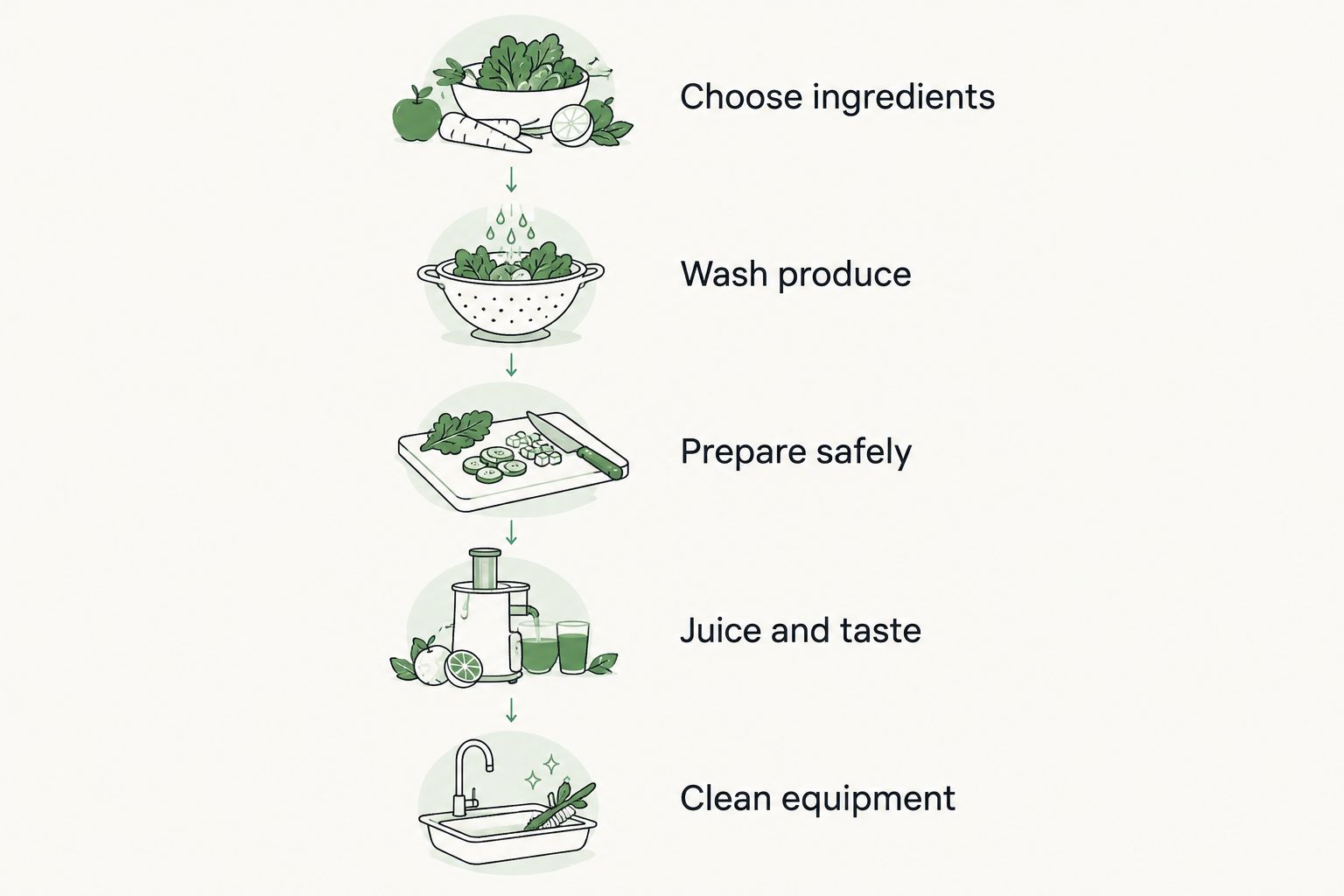
Use the same preparation sequence whichever recipe you choose. Consistency makes it easier to notice whether an adjustment improves the drink.
- Choose ingredients: Pick a combination based on flavours you already enjoy.
- Wash produce: Clean the produce and your preparation area before cutting.
- Prepare safely: Remove unsuitable skins, cores and seeds, following your machine’s guidance.
- Juice and taste: Stir the finished juice before deciding what to change.
- Clean equipment: Follow the manufacturer’s cleaning instructions after use.
Keep a short note of what went into a combination you liked. Record the produce and your own quantities, rather than expecting every apple or orange to taste identical.
Homemade or ready-made: choose the work you want to do
Home Juice cold-pressed juice is best for beginners who want ready-made drinks without juicer preparation or clean-up. Homemade juice suits you better when experimenting with ingredients is part of the appeal.
The brand’s verified details include 100% certified organic juices, cold-pressing with no heat, and 375 ml servings. Its cleanse format includes 7 juices per day, which is a different purchase from making an occasional drink at home.
| Approach | Best for | Main advantage | Main limitation |
|---|---|---|---|
| Homemade juice | Adjusting ingredients yourself | You control the combination | You handle preparation and equipment cleaning |
| Ready-made cold-pressed juice | Skipping juicer preparation | No juicer is needed | You choose an existing recipe rather than adjusting it |
If you prefer ready-made drinks, these products connect directly to the carrot-and-citrus and single-ingredient options above. Choose by flavour and convenience rather than assuming you need a complete programme.


How the recipes are ranked
This 2026 ranking prioritises familiar flavour, preparation, adjustability and a distinct reason to choose each combination. It is an editorial selection based on the listed ingredients, not a tasting trial or a nutritional score.
Carrot, apple and orange takes the default position because it offers familiar ingredients and straightforward adjustments. The remaining choices serve different preferences rather than competing to be universally better.
Which beginner juicing recipe should you choose?
Start with carrot, apple and orange if you want the clearest default. Choose the cucumber-and-pineapple combination for your first green juice, or celery if a minimal ingredient list matters most.
For your 2026 routine, repeat a combination you like before buying ingredients for several more. You will learn more from adjusting a familiar recipe than from changing every ingredient each time.
FAQ
What's the best juicing recipe for a complete beginner?
Carrot, apple and orange is the best default in this guide because it uses familiar flavours and is easy to adjust. Start without optional turmeric, then change the balance to suit your taste.
What's an easy green juice recipe for beginners?
Cucumber, pineapple, leafy greens and lime is an approachable starting combination. Follow your juicer’s instructions for leaves and adjust the greens gradually.
Do I need to copy the bottled juice recipe exactly?
No, homemade combinations do not need to copy bottled recipes exactly. Use the listed ingredients as inspiration and record the balance you enjoy.
Can I use a blender instead of a juicer?
Yes, but a blender makes a different drink because it retains the blended pulp unless you strain it. Follow the blender’s instructions and add liquid as needed for the machine to work properly.
Should I peel fruit before juicing?
Peeling depends on the ingredient and your machine’s instructions. For the recipes here, remove orange and lime peel, pineapple skin and watermelon rind before juicing.
Is homemade juice the same as eating whole fruit and vegetables?
No, juicing separates liquid from much of the produce’s fibre-containing pulp. Keep whole fruit and vegetables in your meals rather than treating juice as an interchangeable replacement.
What if I don't like celery juice?
Choose a different combination rather than forcing yourself to enjoy celery juice. Carrot, apple and orange offers a fruit-led alternative, while cucumber and pineapple provides another direction.
Is ready-made juice easier than juicing at home?
Ready-made juice removes produce preparation and juicer cleaning. Homemade juice gives you more control over the ingredients and their balance, so the better choice depends on which work you want to do.
One last thing
Change the balance before adding another ingredient. If a juice tastes too earthy, too sharp or too strongly herbal, simplify the next attempt instead of expanding the shopping list.
The most useful beginner habit in 2026 is keeping a recipe you can repeat. Enjoying your drink matters more than making the ingredient list impressive.