
You can feel hungry by your next usual mealtime on a juice cleanse, but there is no reliable hour-by-hour timetable. Hunger depends on what you last ate, what your drinks contain and your activity; you do not need to push through persistent hunger to finish a programme.
- When do you feel hungry on a juice cleanse? Your next usual mealtime is possible; there is no fixed countdown.
- Homejuice supplies seven juices per cleanse day, but bottle count alone does not predict fullness.
- Cold-pressed juice is not nutritionally interchangeable with a balanced meal.
- If hunger persists, eat rather than treating discomfort as a sign of progress.
Why this matters
A juice schedule tells you when to open a bottle. It does not tell you when your body will want food, and feeling hungry does not mean you have done something wrong.
Before choosing a programme in 2026, separate its practical details from your expectations about fullness. The guide to what is included in a one-day juice cleanse helps you check the format before deciding whether it suits your day.
Your appetite is information, not a test of willpower. You can change your plan, include food or stop without needing to justify the decision.
How soon will you feel hungry on a juice cleanse?
You can notice hunger around a usual breakfast, lunch or dinner time, including on the first day. There is no established average that lets you predict a particular number of hours, and a programme's length does not establish when hunger will start or disappear.
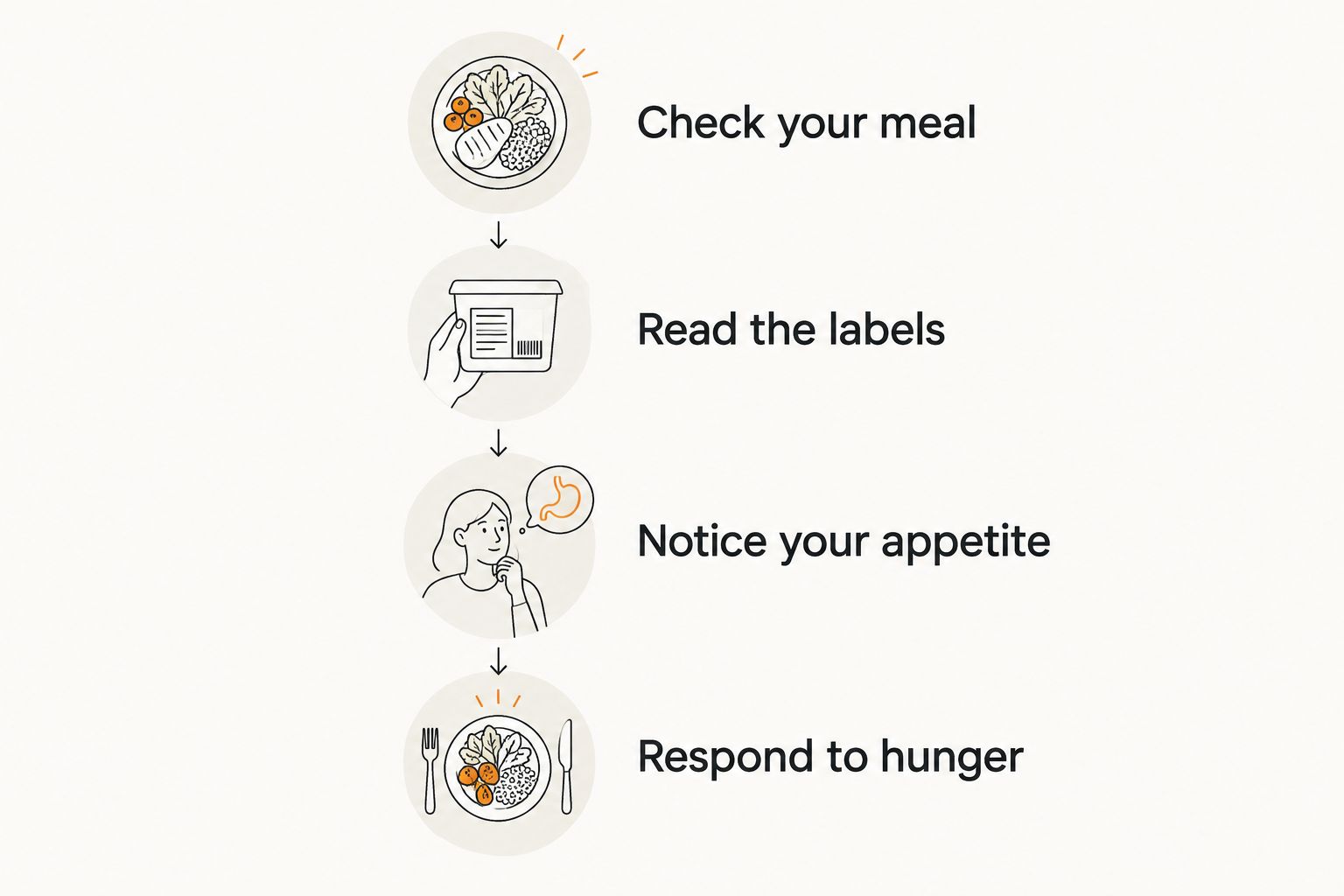
Instead of watching the clock, use this simple sequence:
- Check your last meal. Notice whether you started after a normal meal or after already skipping food. Those are different starting points.
- Read the drinks' labels. Look at energy, protein, fat and fibre rather than relying on bottle size or the colour of the juice.
- Notice your appetite. An empty feeling, thoughts about food and wanting a meal are reasons to pause and assess what you need.
- Respond to hunger. If you want food, eat. Do not keep extending the wait because a schedule says another drink is due later.
These steps are a practical check-in, not a way to diagnose symptoms. Feeling faint, confused or significantly unwell is a reason to stop the cleanse and seek medical advice, not to keep experimenting with timing.
Why hunger timing varies
Hunger during a juice cleanse is not the same experience for everyone. These factors explain why another person's timeline is a poor guide to your own:
- Your starting point. What and when you last ate changes the context of your first juice. Starting hungry is different from starting after a satisfying meal.
- The drinks' composition. Energy, protein, fat and fibre matter. A large bottle and a small bottle cannot be compared on volume alone.
- Your usual meal pattern. Familiar breakfast, lunch and dinner times can bring an expectation of food, even when you have changed your routine.
- Your activity. A quiet day at home and a physically demanding shift place different demands on you. Choose your eating plan around the day you actually have.
- The presence of solid food. Drinking juice alongside meals is different from replacing meals with juice. Do not expect those approaches to feel identical.
For your 2026 planning, start with the factors you can check: your calendar, your usual meals and the product labels. There is no need to copy someone else's schedule or regard stronger hunger as evidence of a better experience.
What does a day's bottle count tell you about fullness?
Homejuice's organic juice cleanse format includes seven juices per day in 375 ml servings. That adds up to 2,625 ml across the seven servings, but the total volume is not a measure of how satisfying the day will feel.
Seven juices per day describes the format, not a guarantee that you will stay full. A serving's energy and nutrients need to be read separately from its volume.
For example, a vegetable juice, a fruit-led juice and an almond drink are not interchangeable simply because they occupy similar bottles. Ingredients give you a starting point, while the nutrition information provides the detail needed to compare them.
Keep these distinctions in mind:
- Volume: how much liquid the bottle holds.
- Energy: what the drink contributes to your overall intake.
- Composition: the protein, fat, carbohydrate and fibre listed for that serving.
- Personal response: whether you feel satisfied after drinking it.
Do not turn 375 ml into an instruction to ignore your appetite. If the planned servings leave you wanting a meal, adjusting the plan is more sensible than assuming the bottle count must be enough for you.
What should you do when hunger starts?
Start by asking a straightforward question: do you want something to eat? You do not have to prove that hunger is intense enough before having food.
The comparison below separates practical choices from rules that make a cleanse unnecessarily difficult. It is not a ranking of discipline or commitment.
| Choice | Best for | Advantage | Limitation |
|---|---|---|---|
| Eat a balanced meal | Hunger at a normal mealtime | Gives you room to include protein, fibre and fat | Changes a juice-only plan |
| Have a snack | Hunger between meals | Lets you respond without waiting for the next meal | Does not replace a balanced meal when you need one |
| Include juice alongside meals | Keeping familiar eating routines | Lets you enjoy juice without removing meals | Is not a juice-only cleanse |
| Continue ignoring hunger | No recommended use | Keeps the original schedule unchanged | Leaves your need for food unanswered |
A balanced meal can be simple: choose a protein source, vegetables and a carbohydrate food you enjoy. Eggs on wholegrain toast, a bean-and-rice bowl or tofu with vegetables are ordinary meal ideas, not special cleanse requirements.
If you choose a snack, consider what you actually want and what suits your dietary needs. Fruit with yoghurt, hummus with wholegrain crackers or a small sandwich are examples; allergies and personal requirements still apply.
Water can accompany your day, but it is not a substitute for food when you are hungry. Avoid turning every appetite signal into another instruction to drink more.
How should you choose a programme if hunger worries you?
Homejuice organic cold-pressed juice is best for shoppers who value certified-organic ingredients and clearly described servings, not a promise of all-day fullness. Its verified product details include 100% certified organic ingredients, cold-pressing with no heat, no additives or preservatives, and recyclable packaging.
Those are useful purchasing details. They do not establish that a juice-only day will suit your appetite, and organic certification does not make juice nutritionally equivalent to a balanced meal.
The Signature Organic Juice Cleanse is one programme to consider when comparing the brand's formats. Before choosing, read the current contents, ingredient information and directions rather than assuming the programme name predicts how you will feel.
For a first purchase in 2026, make the decision in this order:
- Decide whether you want drinks alongside meals or a programme that changes your usual eating pattern.
- Check ingredients against your allergies, preferences and any dietary advice you follow.
- Read the nutrition information and serving instructions.
- Leave yourself permission to eat and change the plan.
The advantage is a defined selection of drinks rather than having to prepare each juice yourself. The limitation is equally important: a defined selection cannot anticipate your appetite or individual nutritional needs.
What if evening hunger is the hardest part?
Evening hunger deserves the same response as hunger earlier in the day. Do not dismiss it simply because you have followed the programme until dinner or are close to finishing.
Look back at your whole day. If you have replaced meals with drinks and now want a substantial dinner, another small drink is not automatically the right answer. You can eat dinner and leave the juice-only plan behind.
When you want a snack rather than a full meal, choosing high-protein snacks for evening hunger means considering a food's protein content as well as its convenience. Plain yoghurt, eggs or edamame are examples to assess against your preferences and allergies; none is a requirement for completing a cleanse.
Keep the choice practical. Choose food you enjoy, eat without rushing and reassess whether you still want more. If a snack leaves you wanting dinner, have dinner rather than repeatedly trying to postpone it.
There is no need to compensate the following morning by skipping breakfast or extending the programme. Eating when you are hungry does not create a debt to repay.
Will hunger go away after the first day?
There is no guaranteed point when hunger disappears during a juice cleanse. You should not plan around a promise that the next day will automatically feel easier.
A 2026 programme description can explain what arrives and how the drinks are organised. It cannot provide a personal appetite forecast, so choose based on practical suitability rather than an expected turning point.
Can you eat without abandoning the whole experience?
Yes, you can eat and still enjoy the juices you have chosen. Including meals changes a juice-only format, but it does not stop the drinks being part of your day.
You do not need a special permission food or a compensatory rule. Choose a meal that suits your needs, and follow the storage instructions for any unopened drinks you plan to have later.
Should you choose a longer cleanse to get used to hunger?
No, choosing a longer programme is not a sound way to solve persistent hunger. Duration tells you how long the schedule runs, not whether it meets your needs.
If a shorter attempt leaves you hungry or uncomfortable, reconsider the format rather than increasing the commitment. Juice alongside regular meals is an alternative when you want the drinks without replacing your usual food.
Before you change your usual eating pattern
If you are pregnant or breastfeeding, under 18, have a history of disordered eating, manage diabetes or take medicines affected by food intake, get individual advice before considering a restrictive juice-only plan. A programme's marketing language cannot replace advice about your circumstances.
The same applies if you have been told to follow a particular diet. Do not change prescribed meals or medication timing to fit a bottle schedule.
For anyone planning a cleanse in 2026, feeling unwell is not something to reinterpret as progress. Stop the restrictive plan and seek appropriate advice if symptoms concern you; urgent or severe symptoms need urgent care.
FAQ
When do you feel hungry on a juice cleanse?
You can feel hungry around your next usual mealtime, but there is no fixed timetable. Your previous meals, the drinks' composition and your activity all affect the experience.
Is it normal to feel hungry on the first day?
Hunger can occur on the first day when you change or replace your usual meals. You do not need to ignore it to complete the programme.
Will seven juices a day keep me full?
Seven juices per day does not guarantee fullness. Serving volume is separate from energy, protein, fat and fibre, so read the nutrition information and respond to your appetite.
Can I eat dinner during a juice cleanse?
Yes, you can eat dinner if you are hungry. That changes a juice-only format, but you can still enjoy juice alongside your meals.
Should I drink water instead of eating when I am hungry?
Water is not a replacement for food when you are hungry. You can drink water and still choose a meal or snack.
Does cold-pressed juice contain the same fibre as whole fruit?
No, extracted juice generally contains less fibre than the whole fruit or vegetable. Check the product's nutrition information rather than assuming cold-pressing preserves the whole food's fibre content.
Should I keep going if I feel faint during a cleanse?
No, stop the cleanse if you feel faint and seek medical advice. Do not treat feeling unwell as a sign that the programme is working.
One last thing
Write your food plan before your juice schedule. Knowing what you will eat if you are hungry makes the decision easier when the moment comes.
Homejuice organic cold-pressed juice can be something you enjoy without making hunger the goal. Choose the format that fits your day, and change it when your needs change.