
To transition back to normal eating after a juice cleanse, return to familiar, balanced meals, eat slowly and choose portions that feel comfortable. You do not need another restrictive programme or special transition products; this 2026 guide explains how to plan your first meals and when to seek personalised advice.
- To transition back to normal eating after a juice cleanse, choose familiar meals rather than another restrictive programme.
- Homejuice cold-pressed juice is an optional drink alongside food, not a substitute for a varied eating pattern.
- Include protein, carbohydrate and vegetables across your meals; choose textures and portions you find comfortable.
- Get personalised advice if you have eaten very little, feel unwell or manage a medical condition.
Why this matters
Finishing a cleanse can leave you wondering whether ordinary food will undo the effort you have made. Eating a balanced meal is not a setback. The next step is to establish an eating pattern you can comfortably maintain, not to extend food restrictions.
If you are planning ahead, the guide to what is included in a one-day juice cleanse explains the programme format. Your meals afterwards serve a different purpose: bringing variety and ordinary eating back into your day.
Keep the distinction clear. A juice programme is a purchase with particular contents; returning to food is not a test you pass by avoiding certain ingredients.
How do you transition back to normal eating after a juice cleanse?
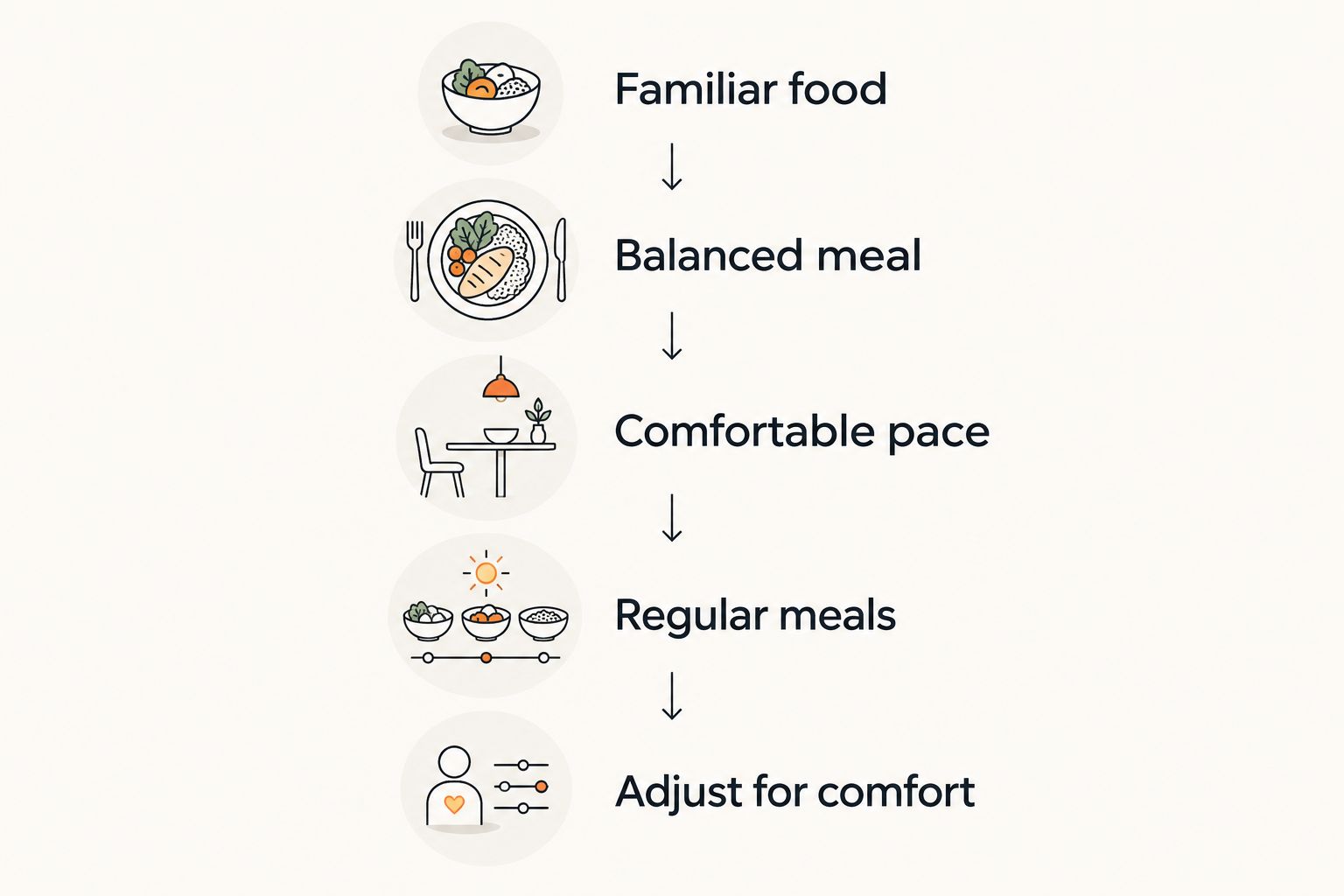
Use the following sequence as a practical meal-planning checklist, not a medical feeding schedule. There is no need to copy someone else's portions or make yourself wait until a particular hour to eat.
- Choose familiar food. Start with something you already enjoy and usually tolerate, rather than an unfamiliar supplement or elaborate recipe.
- Build a balanced meal. Include a protein food and a carbohydrate food, with vegetables or fruit as appropriate to the meal.
- Eat at a comfortable pace. Sit down, chew your food and notice hunger and fullness rather than treating the meal as something to rush through.
- Continue with regular meals. Respond to your appetite instead of compensating for eating by skipping the next meal.
- Adjust for comfort. If a meal feels too large, choose a smaller amount and eat again when you are hungry. Persistent discomfort needs professional advice, not a stricter cleanse.
These steps are an everyday planning approach for someone who feels well. If you have had a prolonged period of very little food, have become unwell or have specific dietary requirements, ask a clinician how to resume eating safely.
What should your first meal look like?
Choose a meal you recognise, with enough substance to be a meal. A bowl of vegetables alone is not the only acceptable starting point, and you do not have to avoid carbohydrate or protein simply because you have been drinking juice.
The examples below are meal ideas, not prescribed portions. Choose according to your preferences, allergies and usual dietary needs.
| Meal option | Best for | What it brings to the meal | What to watch |
|---|---|---|---|
| Porridge with yoghurt or a suitable fortified alternative, plus fruit | A familiar breakfast | Oats, a protein-containing accompaniment and fruit | Check the alternative's label; products differ |
| Eggs or tofu on toast with cooked vegetables | A savoury meal | Protein, carbohydrate and vegetables | Adapt ingredients for allergies and preferences |
| Rice with fish, chicken or tofu and vegetables | Lunch or dinner | A flexible combination of meal components | Choose an amount that suits your appetite |
| Vegetable and lentil soup with bread | A warm, spoonable meal | Legumes, vegetables and carbohydrate | Lentils do not suit everyone's digestive comfort |
There is no winning option for everyone. Porridge is convenient if breakfast is your next meal; rice and vegetables make more sense if you are sitting down to dinner.
Soup can be appealing, but check what is actually in it. A clear vegetable broth and a substantial lentil soup are different meals, even though both arrive in a bowl.
Do you need a strict transition timetable in 2026?
Do not turn a general suggestion into a compulsory timetable. Your next meal should reflect your circumstances, including how much you have actually eaten and how you feel, rather than an online rule about when particular foods become permissible.
A short juice programme and a prolonged period of inadequate intake are not interchangeable. The latter needs individual assessment, especially if you have unintentionally lost a substantial amount of weight, have ongoing illness or struggle to eat enough.
For everyday planning, prepare your next meal before the programme ends. That removes the practical gap between finishing the last bottle and realising there is nothing suitable in the kitchen.
If instructions supplied with a programme conflict with advice from your treating clinician or accredited practising dietitian, follow your health professional's guidance. A product schedule does not replace advice about your own needs.
Why your return to normal eating varies
The useful differences are practical and personal, not a matter of having more willpower. Consider these factors when planning meals after a cleanse in 2026:
- Your actual intake. What you consumed matters more than the programme's name. Tell a health professional if you have eaten very little.
- Your appetite. Choose a comfortable meal size and leave room to respond to hunger later.
- Your familiar foods. Meals you already tolerate give you a more straightforward starting point than unfamiliar ingredients.
- Your dietary requirements. Allergies, intolerances and prescribed diets still apply after a cleanse.
- Your health and medicines. Ask your treating clinician about changes to food intake when you manage a condition or take medicines affected by meals.
- Your daily routine. Work, travel and access to a kitchen influence which meals are realistic to prepare and eat.
Do not compare your plate with someone else's social media post. The relevant question is whether your eating pattern suits your needs and supports a return to ordinary meals.
How can you make the next meals easier?
Start with your calendar and kitchen, not another shopping list of specialist products. Decide where you will be for your next meals, then make sure you have familiar ingredients available.
For a workday, that might mean packing leftovers and bringing cutlery. At home, it might mean cooking rice and preparing a protein food while vegetables roast. Neither approach requires a separate post-cleanse menu.
Prepare components you can combine, rather than planning a perfect menu. A cooked grain, a protein food and vegetables give you flexibility when your appetite or schedule changes.
If you share meals with other people, keep the main meal flexible. Serve components separately so everyone can choose their own combination without needing an entirely different dinner.
Make protein part of the meal, not an extra programme
Once you are planning ordinary meals again, include protein foods you enjoy, such as eggs, tofu, legumes, fish or chicken. You do not need to buy a powder simply because the preceding programme was liquid-based.
When planning protein-rich meals for a shared household, using a common base of rice and vegetables lets each person add a protein food that suits their preferences. This keeps the focus on a practical dinner rather than a separate set of food rules.
Choose the approach you will actually use. A simple meal made from familiar ingredients is a better planning outcome than an ambitious menu you have no time to prepare.
Where does cold-pressed juice fit afterwards?
Homejuice cold-pressed juice is best suited to shoppers who want a prepared drink alongside meals, rather than a replacement for varied food. Keeping a juice in your routine is optional; it does not determine whether your transition has been successful.
Homejuice's verified cleanse format includes seven juices per cleanse day in 375 ml servings. The brand also specifies 100% certified organic ingredients, cold pressing with no heat, and no additives or preservatives. Those are product characteristics, not evidence that you should continue drinking juice instead of eating meals.
If you have been considering Clean & Lean, keep the buying decision separate from your return to food. Choosing a programme does not create a requirement to purchase another one afterwards.
The practical advantage of a prepared drink is convenience. Its limitation is equally important: juice does not replace the full variety of foods in a balanced eating pattern. In 2026, judge your ongoing routine by the meals you can maintain, not by how long you can keep following a bottle schedule.
What if you feel uncomfortable after eating?
Do not automatically interpret discomfort as a sign that you need more juice or less food. Consider the meal, the amount and how quickly you ate, but avoid diagnosing the cause yourself.
If discomfort keeps returning, speak with your GP or an accredited practising dietitian. Seek prompt medical care for severe abdominal pain, repeated vomiting, fainting or an inability to keep fluids down.
Feeling unwell is not something you need to push through to finish a programme. The same applies if you feel dizzy, weak or unable to manage your usual activities.
Get individual advice before changing your intake if you are pregnant or breastfeeding, manage diabetes, have kidney disease or have a history of an eating disorder. General meal suggestions are not a substitute for care tailored to those circumstances.
Can you have coffee or eat at a restaurant afterwards?
You do not need to treat a café visit or restaurant meal as a failure. Choose familiar food, order an amount that suits your appetite and avoid using the occasion as a reason to skip meals beforehand.
If you drink coffee, consider your usual tolerance and any advice from your clinician. Coffee is not a replacement for breakfast, and you do not need it to make a post-cleanse routine complete.
Social plans are another reason to keep the transition simple. Looking at a menu ahead of time can make the next meal feel ordinary rather than another decision governed by a programme.
FAQ
What should I eat first after a juice cleanse?
Choose a familiar, balanced meal that you usually tolerate, such as porridge with yoghurt and fruit or rice with tofu and vegetables. Eat at a comfortable pace and choose an amount that suits your appetite.
How long should I wait before eating solid food after a juice cleanse?
Do not impose an arbitrary waiting period before returning to food. Your circumstances matter; get personalised advice if you have eaten very little, feel unwell or have medical dietary requirements.
Can I eat bread or rice after a juice cleanse?
Bread and rice can be part of a balanced meal after a juice cleanse. Combine them with a protein food and other foods you enjoy, subject to your usual dietary requirements.
Do I need to drink only soup after a juice cleanse?
You do not need to follow a soup-only routine. Soup is an optional meal, and its ingredients determine whether it is a substantial meal or simply a light broth.
Can I keep drinking juice with normal meals?
Juice can be an optional drink alongside normal meals. Keep varied foods in your routine rather than using juice to replace meals indefinitely.
What if I am still hungry after my first meal?
Respond to your hunger rather than treating it as a failure. Have more food or plan another meal or snack instead of imposing another restriction.
When should I get advice about eating after a cleanse?
Get personalised advice if you have eaten very little, feel persistently unwell, manage a medical condition or have a history of an eating disorder. Severe pain, repeated vomiting or fainting needs prompt medical care.
One last thing
Plan the meal after your last bottle before you plan another programme. Put familiar ingredients in the kitchen, decide what you will eat and leave yourself enough time to sit down with it.
Your simplest 2026 checklist is not a list of forbidden foods. It is a meal you enjoy, a routine you can maintain and permission to eat when you are hungry.