
Yes, kombucha can contain alcohol because fermentation naturally produces ethanol; the amount depends on how the drink is brewed, processed and stored. A non-alcoholic description does not necessarily mean zero alcohol, so check the bottle’s alcohol information and ask the producer if you need to avoid alcohol completely.
- Does kombucha contain alcohol? Yes—fermentation produces ethanol, so check the alcohol by volume, or ABV.
- Non-alcoholic kombucha is not automatically alcohol-free; the exact bottle matters more than the category name.
- Homejuice offers organic kombucha for shoppers exploring fermented tea; alcohol-sensitive buyers need product-specific confirmation.
- Refrigeration slows fermentation but does not remove alcohol already present.
Does kombucha contain alcohol?
Kombucha can contain alcohol even when it is sold as an everyday fermented tea rather than an alcoholic drink. Yeasts convert some of the sugar into alcohol during fermentation. Bacteria then convert some of that alcohol into acids, which contribute to kombucha’s characteristic tang.
The finished amount is not fixed across the category. You cannot establish a bottle’s alcohol content from its flavour, organic status or ingredient list alone.
For Australian shoppers comparing drinks in 2026, these distinctions help:
| Drink category | Best for | Useful feature | Limitation |
|---|---|---|---|
| Commercial non-alcoholic kombucha | Shoppers seeking fermented tea without choosing an alcoholic beverage | You can check packaged product information and contact the producer | Non-alcoholic does not necessarily mean zero alcohol |
| Hard kombucha | Adults intentionally choosing an alcoholic fermented drink | Alcohol content is part of the product’s stated identity | It is not an alternative for someone avoiding alcohol |
| Home-brewed kombucha | Experienced home brewers interested in fermentation | You control ingredients and brewing conditions | Alcohol content is difficult to establish without suitable testing |
If you are browsing the drinks range at Homejuice, use the same approach: choose by the information for the exact product, not by assumptions about fermented drinks.
Why this matters
Choosing a drink because you enjoy its taste is different from choosing one because you must avoid alcohol. A small amount that fits one person’s preferences does not automatically fit another person’s medical advice, recovery plan or religious requirements.
Start with your actual requirement. Are you avoiding alcoholic beverages, or do you need a drink with no alcohol? That distinction makes the next step much clearer.
If complete alcohol avoidance is essential, do not treat an unconfirmed kombucha as a suitable choice. Choose another drink while you get a clear answer from the producer.
What does non-alcoholic mean on an Australian bottle?
Non-alcoholic and alcohol-free are not interchangeable descriptions. The Australian New Zealand Food Standards Code sets rules for alcohol statements and claims, while liquor-sale requirements also depend on the relevant state or territory.
Under Food Standards Australia New Zealand’s Standard 2.7.1, a beverage containing more than 1.15% alcohol by volume must carry a statement of its alcohol content. The standard also prevents a beverage containing more than 1.15% alcohol by volume from being described as low alcohol.
That figure is a labelling threshold, not a promise that drinks below it contain no alcohol. It is also not a personal safety limit.
For your 2026 shopping checklist, read these terms separately:
- ABV: Alcohol by volume describes the proportion of alcohol in the drink.
- Alcohol-free: This is a stronger claim than simply being presented as a non-alcoholic alternative.
- Low alcohol: This describes reduced alcohol content, not its absence.
- Live or raw: These terms do not tell you the alcohol percentage.
- Organic: This does not establish whether fermentation has produced alcohol.
A percentage without context is easy to misread. 0.5% ABV means 0.5 ml of pure alcohol per 100 ml of drink, not half of the bottle’s contents. That explanation describes the measurement; it does not establish the content of any particular kombucha.
Why kombucha’s alcohol content varies
Kombucha is made through fermentation, so production and handling matter. These factors explain why a general answer cannot replace information about the bottle you are buying:
- Microbial culture: The balance of yeasts and bacteria affects how sugar becomes alcohol and acids.
- Fermentable sugar: Sugar available to the culture influences what fermentation can produce.
- Fermentation time: Alcohol and acid levels change during brewing; longer does not simply mean a predictable final percentage.
- Temperature: Warmer conditions can increase fermentation activity in a live product.
- Processing: Filtration, pasteurisation and other production controls affect microbial activity after brewing.
- Storage: Time and storage conditions matter when a finished drink still contains active cultures and fermentable sugar.
These are reasons to follow the producer’s instructions, not reasons to guess a percentage. Two drinks with similar ingredient lists can have different alcohol levels because their production controls differ.
How do you check kombucha before buying?
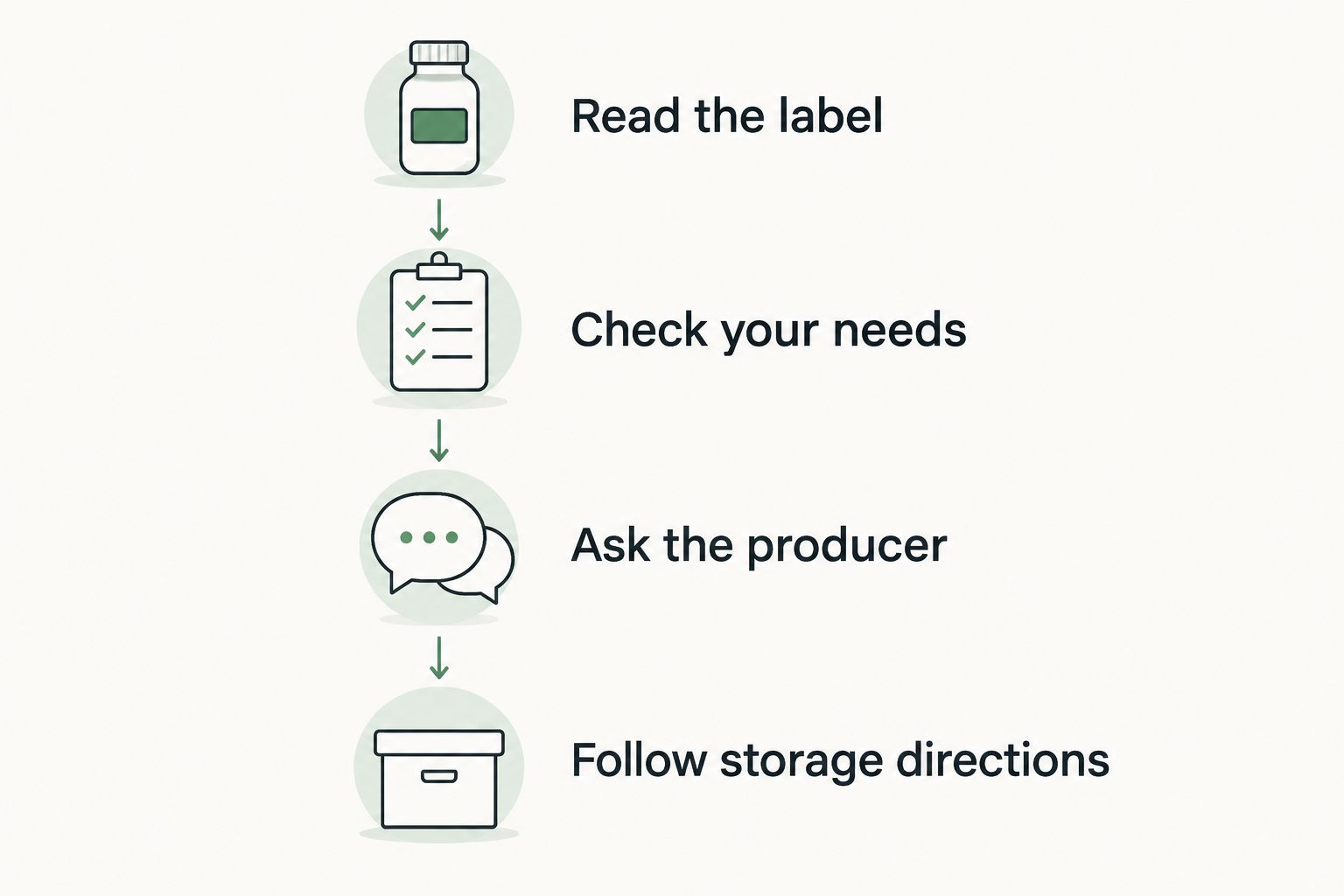
You do not need to become a fermentation expert. Follow a simple sequence and stop when the information does not meet your needs.
- Read the label. Look for an ABV statement, alcohol warning, storage directions and any alcohol-free claim. Check the exact flavour and bottle rather than relying on a range description.
- Check your needs. Decide whether you are avoiding alcoholic drinks or require complete alcohol avoidance. If the requirement comes from medical advice, follow that advice rather than interpreting a marketing term yourself.
- Ask the producer. Request the product’s alcohol specification and whether it applies throughout the stated shelf life when stored as directed. Ask whether the answer covers the flavour you intend to buy.
- Follow storage directions. Once you choose a suitable product, keep it under the conditions stated on its packaging. Storage instructions are part of the buying decision, not an afterthought.
For a 2026 enquiry, a useful question is: does the alcohol specification cover this product through its best-before date when stored according to the label? That is more useful than asking whether kombucha in general is alcoholic.
If a response only describes ingredients or brewing traditions, ask again for the alcohol information. Tea, sugar and a culture explain how a drink starts; they do not establish its final ABV.
Does refrigerating kombucha remove the alcohol?
Refrigeration slows microbial activity; it does not remove alcohol already in the bottle. A chilled bottle therefore needs the same alcohol-content check as any other kombucha.
For a live product, keeping it as directed helps limit further fermentation. Leaving it warm is not a reliable way to improve the flavour or make its alcohol content predictable.
Do not use the fridge as a way to correct unknown handling. If a delivery arrives outside the conditions the producer specifies, contact the seller before deciding whether to drink it.
Also check instructions after opening. There is no single storage period that applies to every kombucha, and a generic online recommendation should not replace the directions on your bottle.
Can you tell alcohol content from taste or fizz?
Taste and fizz cannot reliably establish kombucha’s alcohol content. Acidity, sweetness, flavourings and carbonation all affect how a drink tastes, without giving you a dependable ABV reading.
A sharp drink is not automatically more alcoholic. A mild drink is not automatically alcohol-free, either.
Bubbles show that gas is present, not how much alcohol is present. Carbonation can come from fermentation or be introduced during production, so visible fizz does not resolve the question.
The same caution applies to smell and bottle pressure. If a bottle seems abnormal, follow the producer’s handling advice rather than tasting it to decide whether it is suitable.
Is kombucha suitable if you need to avoid alcohol completely?
Kombucha with unconfirmed alcohol content is not a dependable choice for complete alcohol avoidance. You need product-specific information that meets your personal requirement, not reassurance based on the small amounts associated with the category.
For pregnancy, Australian National Health and Medical Research Council guidance states that not drinking alcohol is safest. If you are pregnant or planning a pregnancy, discuss fermented drinks with your healthcare professional rather than assuming a non-alcoholic description settles the question.
The same practical approach applies if you take medication that interacts with alcohol or have been advised to avoid it. Ask a pharmacist or treating clinician about the exact drink and its declared content.
Religious observance and recovery requirements also differ. Choose a drink that clearly meets your requirements instead of trying to make an uncertain product fit. You do not need to drink kombucha to enjoy a varied drinks routine.
Does bottle size change how much alcohol you drink?
Bottle size changes the total amount consumed when the ABV stays the same. A larger serving contains more alcohol than a smaller serving of the same drink.
In Australia, one standard drink contains 10 g of alcohol, according to national alcohol guidance. A standard drink is a measure of alcohol, not a standard bottle, glass or serving.
This matters when comparing package information: ABV describes concentration, while standard drinks describe an amount of alcohol. Neither term should be confused with the number of serves printed on a package.
For everyday decisions in 2026, check both the declared concentration and how much you intend to drink. If you require no alcohol, reducing the serving size does not turn an alcohol-containing drink into an alcohol-free one.
Where does a mixed kombucha pack fit?
Homejuice kombucha is best for shoppers who want to explore organic fermented-tea flavours, provided the product’s alcohol information meets their needs. The Kombucha Combo Pack of 8 offers a mixed-flavour option rather than requiring you to choose a single flavour.
The benefit is variety. The limitation is that a mixed pack does not remove the need to check relevant product information, especially when alcohol avoidance is your deciding factor.
Before ordering Homejuice kombucha in 2026, confirm the alcohol details for the included drinks and read the current delivery and storage terms. A flavour assortment is a useful way to explore taste, but it is not evidence of alcohol-free status.
FAQ
Does all kombucha contain alcohol?
Kombucha fermentation produces alcohol, but the amount remaining in the finished drink depends on production and processing. Check the specific product rather than assuming every kombucha has the same alcohol content.
Is non-alcoholic kombucha completely alcohol-free?
Non-alcoholic kombucha is not automatically completely alcohol-free. Read the alcohol information and ask the producer for confirmation if you need to avoid alcohol entirely.
Can kombucha keep fermenting in the bottle?
Live kombucha can continue fermenting when active cultures and fermentable sugar remain. Follow the storage instructions because temperature and time affect fermentation activity.
Does putting kombucha in the fridge remove alcohol?
Refrigerating kombucha does not remove alcohol already present. It slows microbial activity, so refrigeration is a storage measure rather than a way to make a drink alcohol-free.
Can I drink kombucha while pregnant?
Do not assume kombucha is suitable during pregnancy because it is described as non-alcoholic. Australian guidance says not drinking alcohol is safest during pregnancy; ask your healthcare professional about the specific product.
Is homemade kombucha alcohol-free?
Homemade kombucha is not reliably alcohol-free. Brewing conditions affect alcohol production, and taste or fizz cannot confirm the finished alcohol level.
Does organic kombucha have less alcohol?
Organic status does not establish kombucha’s alcohol content. You still need the product’s alcohol information, regardless of its ingredients or certification.
Can I check kombucha alcohol content with a taste test?
A taste test cannot reliably measure kombucha’s alcohol content. Sweetness, acidity and flavourings affect taste, so use product information rather than your senses to assess ABV.
One last thing
The most useful question is not simply whether kombucha contains alcohol, but whether this exact bottle meets your needs through its stated shelf life. That keeps the decision practical: check the label, confirm anything unclear and choose something else when the answer does not fit.
You can enjoy exploring drinks without turning every purchase into a research project. Establish your requirements first, then keep the product information that answers them.