

You should only drink wellness tonics while taking medication after your pharmacist or prescriber has checked the tonic’s full ingredients against your medicines. Herbal extracts, fruit juices and other ingredients can interact with medicines, and taking them at different times does not automatically make the combination safe. Keep taking prescribed medicine as directed while you check the optional drink.
- Check wellness tonics while taking medication with your pharmacist, using the full ingredient list and your medicine names.
- Homejuice wellness tonics are optional drinks, not substitutes for prescribed medicines or individual advice.
- Organic ingredients and a small serving do not establish medicine compatibility.
- Do not stop prescribed medicine or invent a timing gap to accommodate a tonic.
Can you drink wellness tonics while taking medication?
There is no blanket yes: the answer depends on the exact tonic, medicine and person taking them. Your pharmacist needs the ingredients, intended serving and frequency, plus your medicine names and doses. A product name or a description such as botanical blend is not enough for a meaningful check.
For questions about a Homejuice product’s ingredients, use the Homejuice contact page to request the current label. Take that information to your pharmacist; a retailer’s product description is not personalised interaction advice.
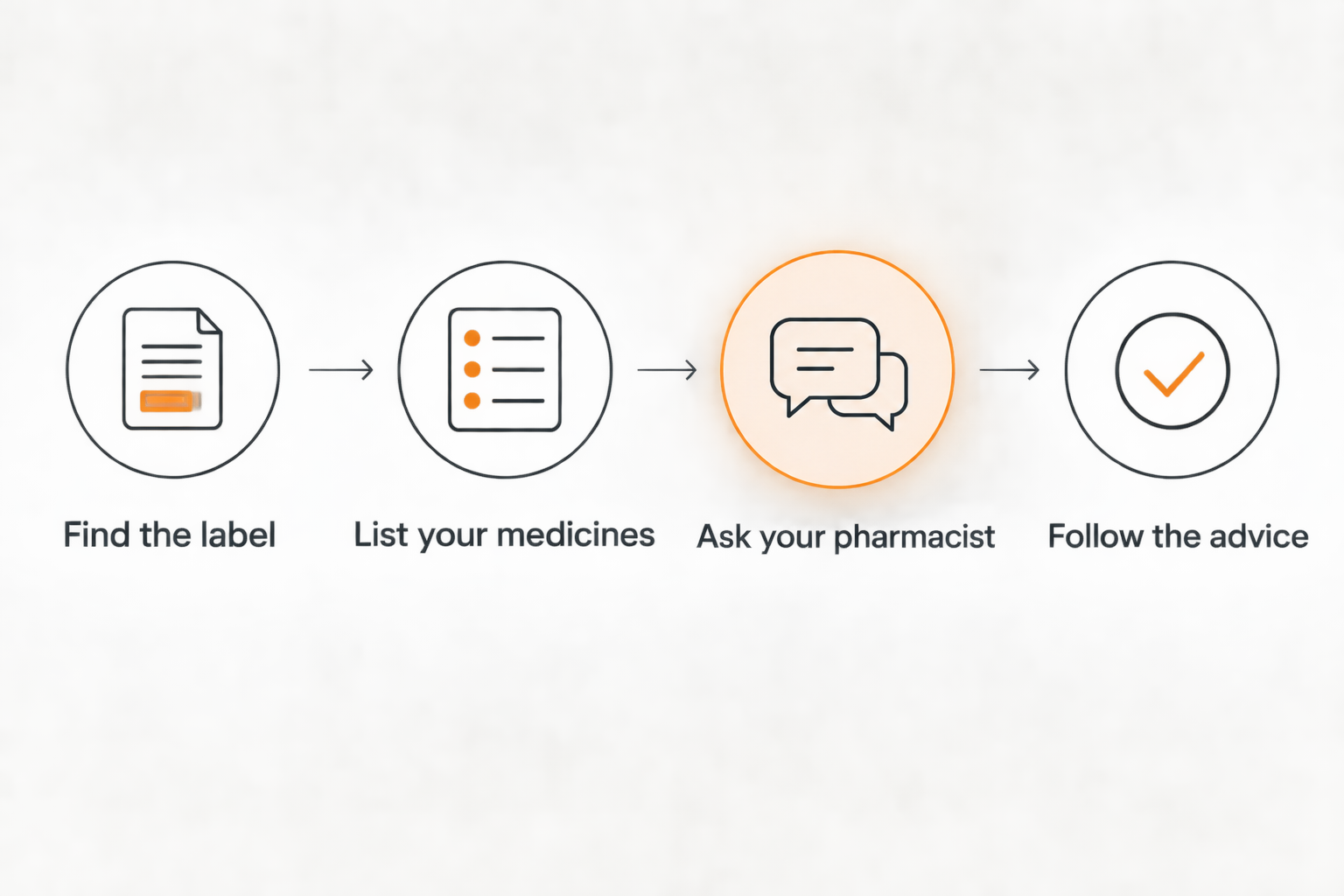
Follow this sequence before opening a new tonic:
- Find the label. Photograph the complete ingredients, directions and warnings, not just the front of the bottle.
- List your medicines. Include prescriptions, pharmacy medicines, vitamins, herbal supplements and occasional medicines.
- Ask your pharmacist. Explain how much tonic you intend to drink and how often.
- Follow the advice. Leave the tonic out unless the pharmacist or prescriber confirms that it fits your treatment.
For a 2026 medicine review, use the bottle you intend to buy or drink. An old screenshot does not establish what is in a different formulation.
Why this matters
A wellness drink can contain ingredients that affect how a medicine is absorbed or processed. An interaction can increase a medicine’s effects, reduce its effects or add unwanted effects. You cannot reliably judge that risk from taste, packaging or the word natural.
This does not mean every tonic interacts with every medicine. It means the useful question is specific: does this ingredient list, at this serving, fit with your current treatment?
Keep the medicine; check the optional extra. Changing a prescribed dose to fit a drink reverses the right priority and needs your prescriber’s involvement.
What should you take to the pharmacist?
A clear photo and a complete medicine list make the conversation much more useful than asking whether herbal drinks are generally safe. Include products you use occasionally, even if they do not feel like part of your regular routine.
Find the label
Capture the ingredients, serving directions, warnings and any stated quantities of extracts. If the label uses a blend name without identifying its contents, ask the supplier for more detail before taking it.
Check the exact flavour and version. Advice about one bottle does not automatically cover another bottle from the same range.
List your medicines
Write down each medicine’s name, strength, dose and usual timing. Include non-prescription pain relief, allergy tablets, sleep products, vitamins and supplements, rather than listing prescriptions alone.
Tell the pharmacist about relevant medical conditions, allergies, pregnancy or breastfeeding. These details help the pharmacist assess suitability beyond a simple ingredient search.
Ask your pharmacist
Explain whether the tonic would be an occasional drink or a daily habit. Show the intended serving rather than assuming that a shot, capful or bottle means the same amount across products.
Ask for a practical answer: whether to avoid the tonic, whether an alternative is suitable, and whether any medicine-specific timing instructions apply. Record that advice with your 2026 medicine list.
Follow the advice
Do not trial the combination to see whether you feel different. Some interactions are not immediately noticeable, so feeling fine after a drink does not establish compatibility.
If the pharmacist needs more information, leave the tonic out while the question is resolved. There is no need to rush an optional addition.
Which ingredients deserve a closer check?
The following are established examples of food, herbal and medicine interactions. They are reasons to check a label, not a claim that every wellness tonic contains these ingredients or that every medicine in a broad category behaves alike.
| Ingredient or situation | Why it matters | Best next step |
|---|---|---|
| Grapefruit with certain medicines | Grapefruit can change the amount of some medicines reaching the bloodstream. | Ask about the exact medicine, not the medicine category alone. |
| St John’s wort with prescription medicines | This herb has recognised interactions with numerous medicines. | Obtain pharmacist or prescriber advice before combining them. |
| Liquorice containing glycyrrhizin | It can affect blood pressure and potassium, which matters with certain treatments. | Show the ingredient and any stated quantity to your pharmacist. |
| Activated charcoal with oral medicines | Charcoal can bind substances in the digestive tract and reduce medicine absorption. | Check compatibility rather than choosing a timing gap yourself. |
| An unidentified botanical blend | Without the ingredients, an ingredient-level interaction check is incomplete. | Request the full formulation before drinking it. |
The US Food and Drug Administration’s consumer guidance on grapefruit and medicines explains why some interactions involve more medicine entering the bloodstream, while others involve reduced absorption. Its guidance on black liquorice also describes the relevance of glycyrrhizin to potassium and heart rhythm.
For your own prescription, start with the Australian Consumer Medicine Information leaflet and a pharmacist. Those sources address your medicine more directly than a general wellness description.
Do not treat this table as a complete screening list. An ingredient being absent from the table does not establish that it is suitable with your treatment.
Why compatibility varies
The same tonic is not automatically appropriate for everyone taking medication. These factors determine what your pharmacist needs to assess:
- Exact ingredients: different herbs, juices and added substances have different interaction profiles.
- Concentration: a concentrated extract is not equivalent to a small amount of the same plant used in cooking.
- Serving and frequency: the intended amount and pattern of use matter to the assessment.
- Exact medicine: medicines used for the same condition can have different interaction warnings.
- Other products: supplements and non-prescription medicines add to the combinations that need checking.
- Personal circumstances: medical conditions, pregnancy and breastfeeding can change suitability.
For any new tonic you consider in 2026, repeat the check if your treatment changes. Previous advice applies to the combination assessed, not every future medicine or formulation.
Does taking a tonic at a different time make it safe?
A gap of 2 hours is not a universal solution to tonic–medicine interactions. Some interactions involve absorption in the gut; others involve processes that are not resolved simply by drinking the tonic later.
The same caution applies to a gap of 4 hours. Use a timing interval only when your pharmacist or prescriber gives instructions for the specific combination.
Taking prescribed medicine with plain water is the default unless its instructions say otherwise. Keep following directions about food, an empty stomach or particular drinks rather than replacing them with general wellness advice.
Are organic wellness tonics safer with medication?
Organic certification does not establish medicine compatibility. It describes production standards, not the result of an interaction assessment involving your prescriptions.
Likewise, cold-pressed, no additives and no preservatives do not answer whether an ingredient affects a medicine. Those details can help you choose a drink, but they cannot replace checking the formulation.
Homejuice wellness tonics are best considered as optional drinks, not replacements for prescribed treatment. The useful buying decision is whether the ingredients suit your preferences and have been checked against your medicines—not whether the product name sounds reassuring.
How should you assess a particular tonic before buying?
Start with the ingredient information, not the promised experience. For example, the Soothe – Gut Balance wellness tonic is a specific product to discuss with your pharmacist; its name alone does not establish compatibility with medication.
The advantage of checking before purchase is simple: you can decide with the relevant information in hand. The limitation is equally important: a product description cannot account for your medicine doses, other supplements or medical history.
Before adding any tonic to your 2026 routine, ask:
- Can I obtain the complete current ingredient list?
- Are the serving directions and warnings clear?
- Has my pharmacist assessed this exact product with my current medicines?
- Do I understand whether the advice includes occasional and daily use?
If the ingredient information is incomplete, wait. Choose after the question is resolved rather than buying first and assuming a small serving will be acceptable.
What if you have already drunk a tonic with your medicine?
Do not panic, and do not take extra medicine or skip the next dose to compensate. Stop drinking the optional tonic for now and contact a pharmacist for advice about the exact combination.
Have the bottle, medicine packaging, amounts and times ready. Explain any symptoms and say whether you took other supplements or drinks as well.
In Australia, call the Poisons Information Centre on 13 11 26 if you are concerned about a potentially harmful exposure or dosing mistake. The service operates 24 hours a day. Call 000 for an emergency, including difficulty breathing or collapse.
You do not need to identify the interaction yourself before asking for help. Clear information about what you took is more useful than trying to interpret symptoms from an online list.
When should you check again?
Ask again when you start, stop or change a medicine, change tonic formulations, or increase how often you drink the tonic. Tell the pharmacist if a different clinician has added a prescription since the original check.
A simple note can prevent confusion: record the product, medicine list, advice and date. Keep that note current throughout 2026 rather than relying on a remembered conversation about a different combination.
Do not extend advice to someone else in your household. Even if you share the same drink, their medicines and circumstances need their own assessment.
FAQ
Can I drink wellness tonics while taking medication every day?
Only add a daily wellness tonic after your pharmacist or prescriber has checked the exact product against your medicines. Explain the intended serving and frequency, because advice about occasional use does not automatically cover a daily routine.
Can I take my tablets with a wellness tonic instead of water?
Use plain water unless your medicine instructions or pharmacist direct otherwise. A tonic can contain ingredients that affect medicine absorption or interact in other ways.
Is a small wellness shot safe if I take prescription medicine?
A small serving does not establish safety with prescription medicine. Concentrated ingredients still need checking against the exact medicines and doses you take.
Can I leave a few hours between medication and a tonic?
Do not assume a timing gap makes the combination safe. Your pharmacist needs to determine whether timing helps for the specific ingredient and medicine involved.
Does certified organic mean a tonic will not interact with medicine?
No, certified organic does not mean interaction-free. Organic status concerns production standards rather than compatibility with your medication.
Should I stop my medicine while I try a wellness tonic?
No, do not stop or change prescribed medicine to try a tonic. Leave the optional tonic out and ask your pharmacist or prescriber for advice.
Who should I ask if the tonic label does not list every ingredient?
Ask the supplier for the complete current ingredient list, then take it to your pharmacist. Do not rely on a product name or general botanical description for an interaction check.
What should I do if I feel unwell after combining a tonic and medicine?
Stop the optional tonic and seek prompt advice from a pharmacist or medical professional. In Australia, call 000 for an emergency or the Poisons Information Centre on 13 11 26 for advice about a potentially harmful exposure.
One last thing
The most useful thing to take shopping is a photo of your medicine list. Pair it with a clear label photo, and your pharmacist can assess the actual combination rather than a general description.
A reassuring name is not an interaction check. You can leave an optional drink on the shelf while you get a clear answer.