
Menopause juice cleansing is a short-term juice routine aimed at a dietary reset, not a treatment for menopause; a juice cleanse for menopause is best approached as juice alongside balanced meals, rather than a replacement for them. This 2026 guide helps you choose drinks without overlooking protein, fibre, bone health or the symptoms that deserve medical care.
- A juice cleanse for menopause is not a treatment for hot flushes, hormonal changes or weight gain.
- Homejuice cold-pressed juice suits organic convenience seekers; keep balanced meals alongside it.
- Prioritise protein, fibre and calcium-rich foods rather than replacing meals with juice.
- Check ingredients and nutrition panels; organic certification does not establish a menopause benefit.
Why juice choices matter for menopause
If disrupted sleep, changing appetite or uncomfortable hot flushes have you looking for a reset, start gently. You do not need to earn better health through hunger, or choose the most restrictive program to make a useful change.
Homejuice cold-pressed juice is best for Melbourne and Victoria shoppers seeking certified-organic convenience, not menopause treatment. Homejuice offers cold-pressed drinks made with no heat, no additives or preservatives, plus recyclable packaging. Those are useful product distinctions, but they do not establish benefits for menopause symptoms.
The Australian Government's Eat for Health guidance centres on varied foods from the core food groups. Use that food-first approach when choosing juice: drinks can add variety, but they should not crowd out the foods that supply protein, fibre and calcium.
Why a food-first reset matters during menopause
Menopause changes the context of a cleanse. Maintaining muscle and bone health matters, while poor sleep or persistent symptoms can make a restrictive eating routine harder to manage. A drink that sounds refreshing is not automatically a complete meal.
Juicing also removes much of the fibre found in whole fruit and vegetables. Juice still contributes fluid and nutrients, but it does not offer the same eating experience or nutritional balance as whole produce alongside a meal.
For your 2026 reset, separate the shopping decision from the health decision. Choose juice for flavour, ingredients and convenience; discuss troublesome menopause symptoms with your GP. A product's detox, radiance or balance wording is not evidence that it changes hormones.
How to choose a menopause-friendly juice routine
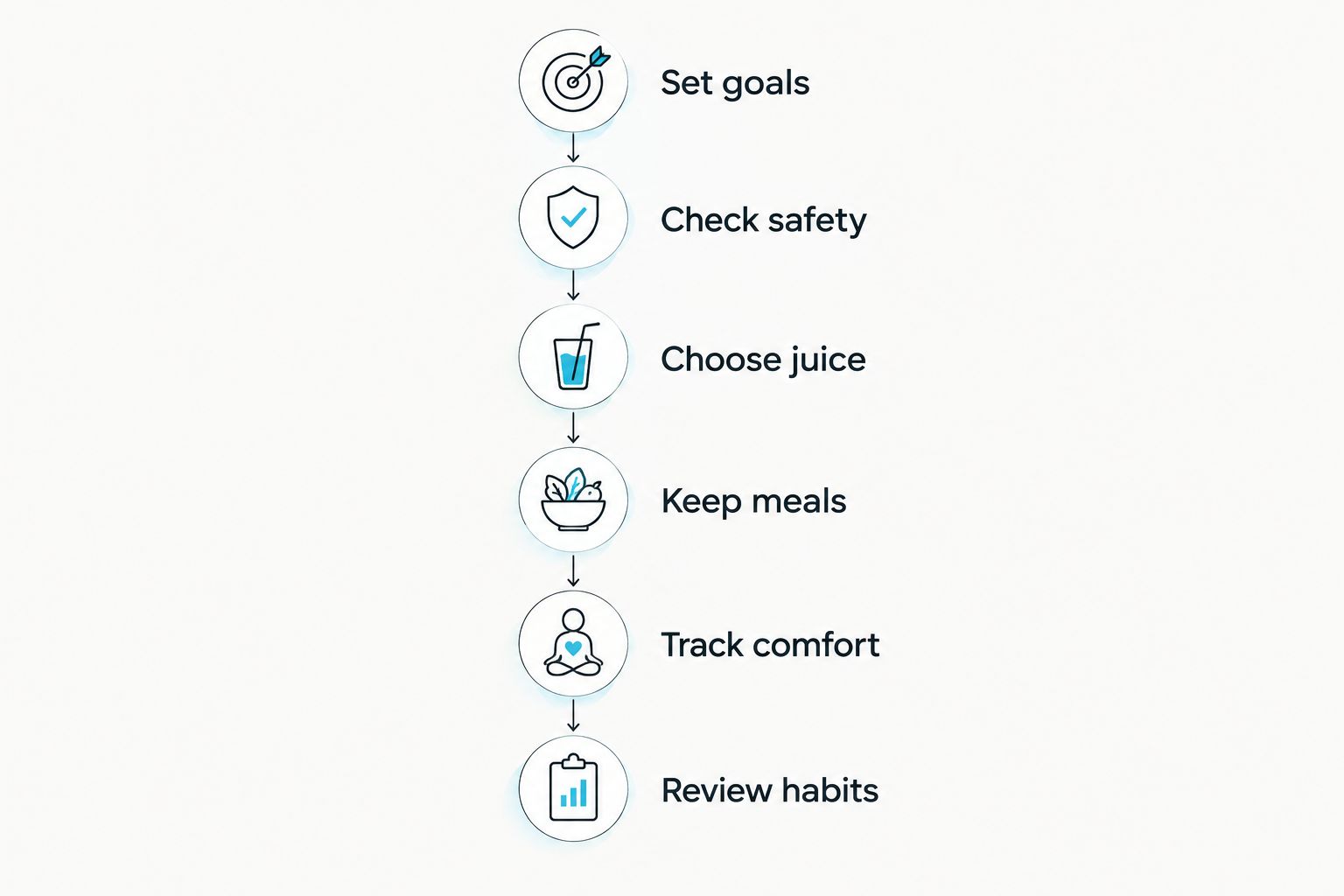
Follow this sequence: Set goals, Check safety, Choose juice, Keep meals, Track comfort, then Review habits. You can complete the planning with a notebook and the drinks already in your fridge; buying a cleanse is not a prerequisite.
Set goals
Start by naming what you actually want to change. A more regular breakfast, a planned afternoon drink or fewer skipped meals gives you a practical target. A promise to detox your hormones does not.
If weight management is your goal, focus on eating and activity habits you can repeat. A short-term change on the scales does not establish lasting fat loss, and juice alone does not address the full picture of sleep, appetite and menopause care.
Keep your first goal small enough to fit an ordinary working day. You are building a routine, not preparing for a test of willpower.
- Write down the habit you want to improve, such as eating lunch regularly.
- Separate symptom goals from food goals; take persistent symptoms to your GP.
- Choose a drink occasion rather than a rule that removes all solid food.
- Decide what success looks like without relying only on the scales.
Check safety
Before replacing meals, ask your GP or an accredited practising dietitian whether that approach fits your health needs. This is particularly important if you have diabetes, kidney disease, take medicines affected by food intake, or have a history of disordered eating.
Take the actual ingredients and nutrition information to that conversation. A program name tells your clinician far less than the drinks it contains and what you plan to stop eating.
Menopause does not make juice-only restriction necessary. If you feel faint, shaky or unwell, stop the restrictive routine and seek appropriate medical advice; do not interpret symptoms as proof that a detox is working.
- List your medicines, supplements and relevant health conditions.
- Show your clinician the proposed drinks and meal changes.
- Ask whether any ingredients conflict with your medicines or health needs.
- Keep prescribed treatment in place unless your prescriber changes it.
Choose juice
The simplest starting point is to read the label on a drink you already enjoy. Check ingredients, serving size, sugars, protein and fibre rather than relying on words such as clean, green or alkaline. Compare nutrition panels on the same basis.
For a faster prepared option, Homejuice offers 100% certified-organic, cold-pressed juice with no heat, additives or preservatives. Those details describe sourcing and preparation; they do not mean a drink is sugar-free, nutritionally complete or designed to manage menopause.
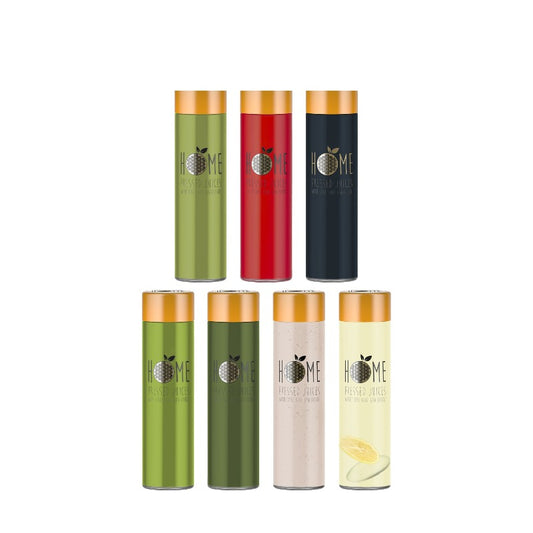
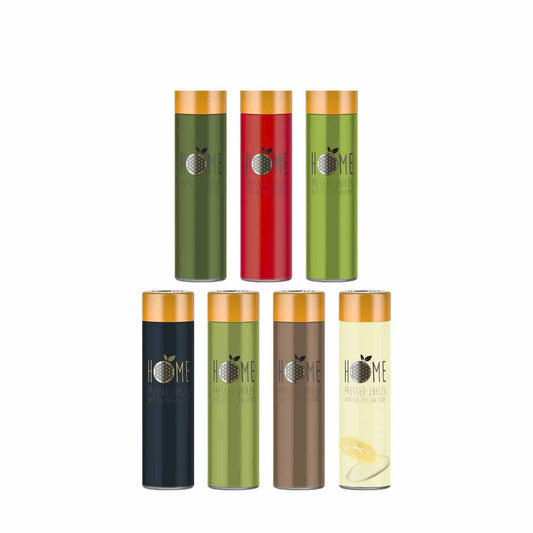
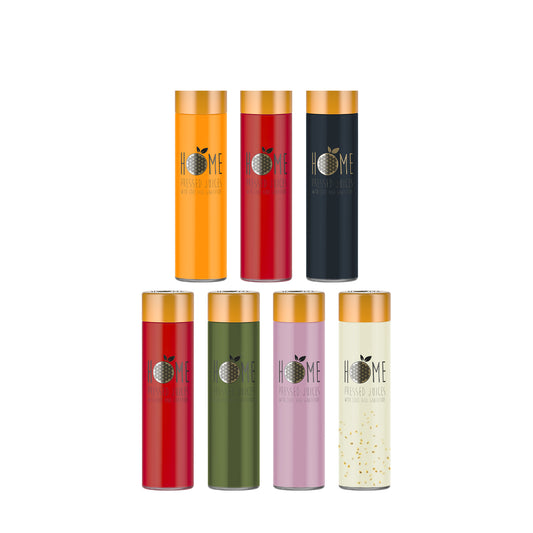
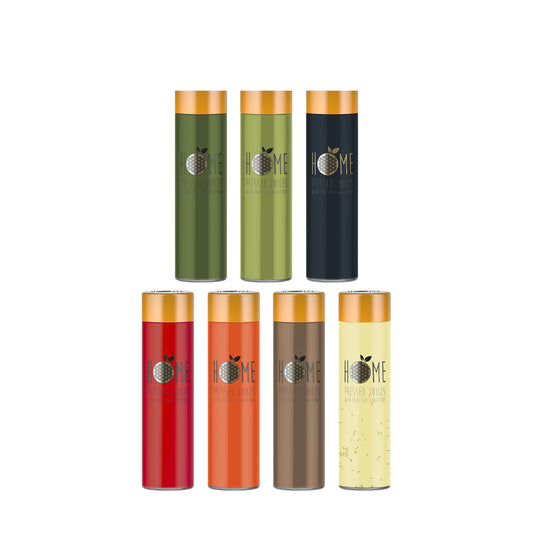
The brand's stated serving size is 375 ml, and its cleanse format includes seven juices per cleanse day. Treat that as a product format, not an instruction to replace your meals. Check the individual drink information before deciding how it fits your day.
- Read the full ingredient list, including fruit, herbs and other additions.
- Compare sugars per equal volume rather than comparing different bottle sizes.
- Check protein and fibre instead of assuming a vegetable drink supplies enough.
- Confirm allergens, storage instructions and use-by information before ordering.
Keep meals
Build the food plan first using familiar supermarket ingredients. Include a protein source, vegetables or fruit, and suitable wholegrain or other fibre-rich foods. Keep calcium-rich foods in the picture, including appropriately fortified alternatives if you do not eat dairy.
Then decide whether juice adds something you enjoy. A prepared drink can simplify that part of the routine, but it does not replace the meal planning. In 2026, convenience should make eating well easier—not make lunch disappear.
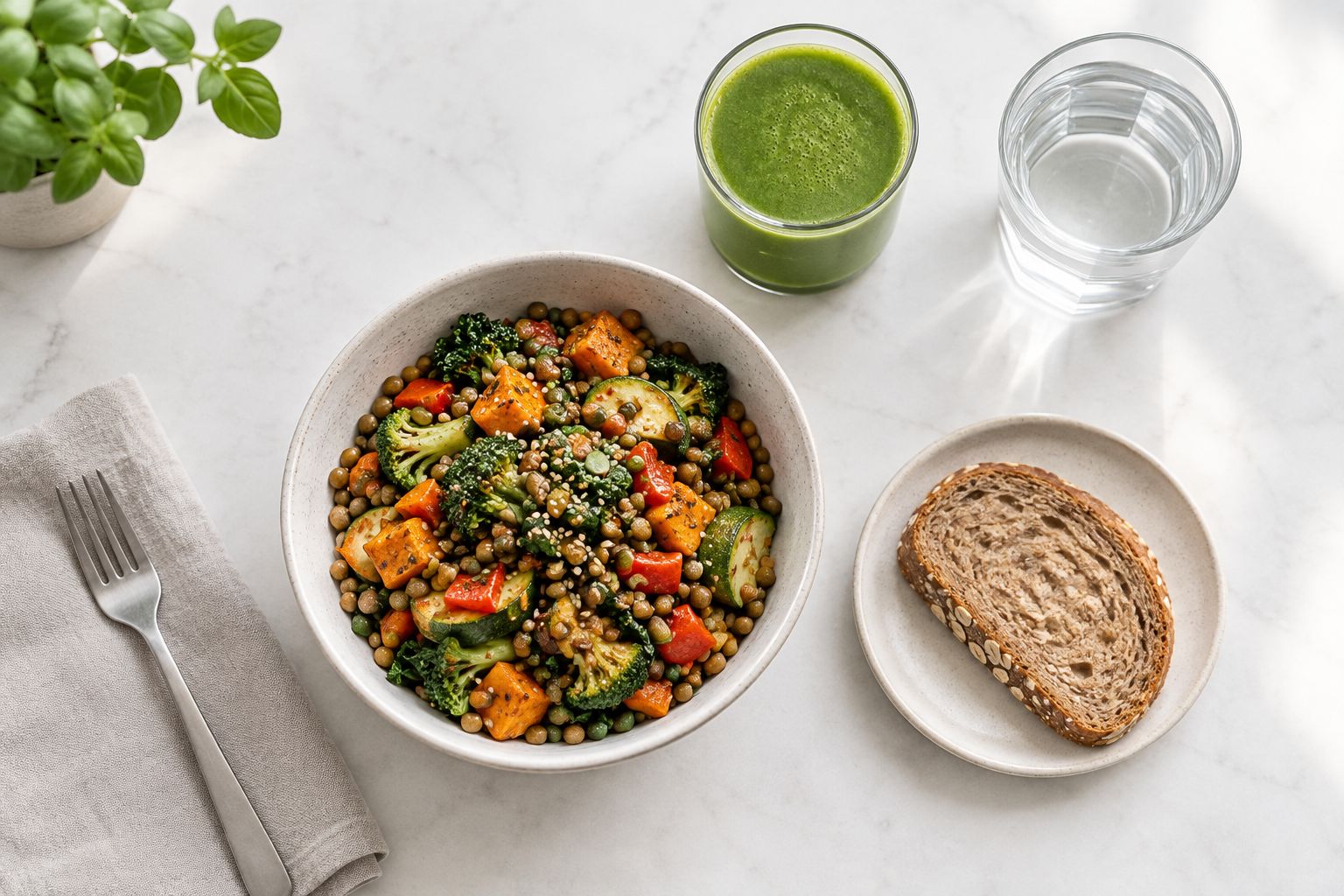
A lunch of lentils, vegetables and wholegrain bread with a small glass of juice is a food-first example. Adapt the foods to your appetite, preferences and medical advice; you do not need a special menopause menu.
You can also pour part of a bottle rather than treating the package as an automatic serving recommendation. Follow the storage instructions for anything left over, and keep water available through the day.
- Include protein-containing foods such as eggs, tofu, legumes, fish or yoghurt.
- Keep whole fruit, vegetables and wholegrains for fibre.
- Include calcium-rich foods or suitable fortified alternatives.
- Place juice beside a meal, not in the meal's place.
Track comfort
Use a brief note on your phone to record what you drank, whether you ate regular meals and how comfortable you felt. Appetite, bowel comfort and energy are useful observations. They are not diagnostic tests.
Record sleep and hot flushes separately rather than crediting every change to juice. Symptoms fluctuate, and a personal diary cannot prove that a drink caused an improvement. The aim is to notice patterns you can discuss with a health professional.
Avoid adding several new drinks, tonics and supplements at once. Keeping the routine simple makes it easier to identify an ingredient you dislike or a habit that leaves you hungry.
- Note the drink and its ingredients, not just the program name.
- Record whether you skipped meals or felt unusually hungry.
- Track digestive discomfort without labelling it a detox reaction.
- Take persistent or worsening symptoms to your GP.
Review habits
After trying your routine, decide what deserves a place in your normal week. Keep the drink if you enjoy it and it fits balanced eating. Change the plan if it creates hunger, complicates meals or becomes something you feel obliged to endure.
Your useful 2026 takeaway is the repeatable habit, not the completion badge. A regular lunch and an enjoyable drink are a better foundation than alternating restriction with a return to the same difficulties.
If weight, sleep or symptoms remain your main concern, ask for individual advice rather than moving automatically to a longer cleanse. More days of restriction do not establish greater benefit.
- Keep the parts that make meals and hydration easier.
- Remove rules that encourage you to ignore hunger or discomfort.
- Review the routine alongside sleep, movement and medical care.
- Choose ongoing support instead of escalating to a stricter program.
Compare your options before choosing
These options serve different purposes. Best for menopause nutrition: balanced meals with optional juice. Prepared drinks win on convenience, while whole foods remain central to a balanced eating pattern.
The table compares practical uses and limitations, not symptom-treatment results. No option below should be selected as a substitute for menopause care.
| Option | Best for | Main advantage | Key limitation |
|---|---|---|---|
| Balanced meals with optional juice | Supporting a varied everyday eating pattern | Keeps protein, fibre and calcium-rich foods central | Requires meal planning; juice still needs to fit your intake |
| Homemade juice alongside meals | Controlling ingredients and flavour | Lets you choose produce you enjoy | Preparation takes time; juicing removes much of the produce's fibre |
| Hydration Organic Juice Pack | Shoppers wanting a prepared mix of water and juice | Combines alkaline water and organic cold-pressed juice | Does not replace meals; alkaline wording does not establish menopause benefits |
| Celery Juice | Shoppers who prefer a single-ingredient vegetable drink | Contains 100% celery juice | Is not a complete meal or a treatment for menopausal symptoms |
| Juice-only cleanse | Shoppers seeking a structured liquid-only routine | Reduces food-preparation decisions during the routine | Removes normal meals and needs individual assessment before use |
For this 2026 guide, the recommendation is to choose a drink you enjoy while keeping meals intact. There is no need to make the routine juice-only to call it a fresh start.
Common mistakes when choosing juice during menopause
Treating balance wording as hormone treatment
A product name containing balance, reset or radiance describes its positioning, not a demonstrated effect on oestrogen or hot flushes. Choose on ingredients and suitability, and seek medical advice for symptoms that interfere with daily life.
Cutting protein while trying to manage weight
Replacing breakfast and lunch with juice changes more than your drink intake: it also removes foods that supply protein and other nutrients. Keep protein-containing foods in your meals rather than assuming an organic drink covers them.
Assuming organic means low sugar
Organic certification relates to production standards, not a guarantee about sugar content. Read the nutrition panel, compare equal volumes and consider how much juice you actually drink. Fruit-rich and vegetable-rich blends still need individual checking.
Calling discomfort a successful detox
Dizziness, weakness or feeling unwell are not goals to push through. Stop the restrictive approach and seek advice when needed. A supportive routine should not require you to dismiss symptoms or ignore hunger.
Using juice to delay menopause care
Persistent hot flushes, sleep disruption or other troublesome symptoms deserve a conversation with your GP. You can enjoy juice while receiving appropriate care; the two decisions are not competing alternatives.
FAQ
What's the best juice cleanse for menopause?
A food-first routine with optional juice is a better starting point than replacing meals with a juice cleanse. Choose drinks by ingredients and nutrition information, and keep protein, fibre and calcium-rich foods in your diet.
Can a juice cleanse balance my hormones?
Do not use a juice cleanse as a hormone-balancing treatment. Product wording such as balance or reset does not establish an effect on menopause-related hormonal changes.
Will a juice cleanse help me lose menopause weight?
A juice cleanse is not a reliable plan for lasting weight management during menopause. Focus on repeatable eating and activity habits, and seek individual advice if weight management is your main goal.
Is celery juice good for hot flushes?
Celery juice should not be used as a treatment for hot flushes. Choose it if you enjoy the flavour, and discuss troublesome hot flushes with your GP.
Can I eat food while drinking cleanse juices?
Yes, you can drink juice alongside balanced meals. Keeping protein-containing foods, fibre-rich foods and calcium-rich foods is preferable to assuming juice supplies everything you need.
What does the Homejuice cleanse format include?
Homejuice states that its cleanse format includes seven juices per cleanse day, with 375 ml servings. That format describes the products, not a personalised recommendation to replace meals during menopause.
Should I ask my GP before starting a juice-only cleanse?
Yes, ask your GP or an accredited practising dietitian before replacing meals with juice. Individual advice is especially important if you have diabetes, kidney disease, relevant medicines or a history of disordered eating.
One last thing
You do not have to finish a bottle simply because you opened it, and you do not have to skip lunch because the packaging says cleanse. Keep the meal, choose the drink, and let the reset be a habit you can comfortably repeat.