Cold-pressed juice and centrifugal juice are not the same drink — and you can see the difference with your own eyes.
We had two bottles of juice — one cold-pressed, one centrifugal — analysed by a certified food lab, made from the same recipe: kale, cucumber, celery, lemon, ginger and green apple. The result: the nutrients in the centrifugal juice broke down far faster than in the cold-pressed juice.
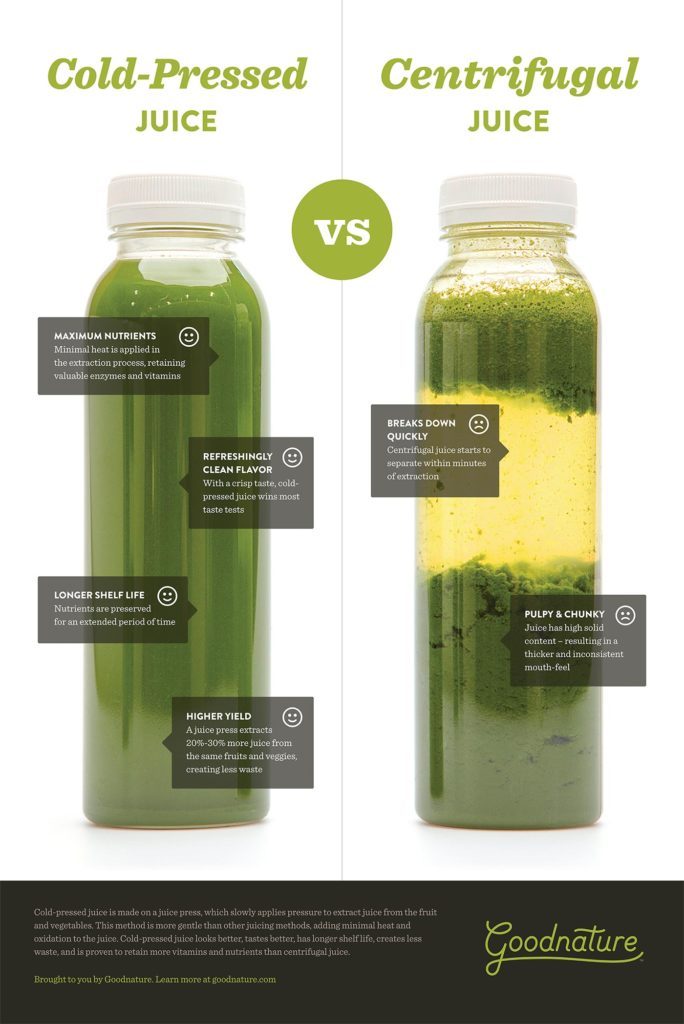
You don't need a lab to see it. Both bottles below were processed at the same time from the same 1.5 lbs of produce, and within the first hour the difference shows:
- Cold-pressed juice stays smooth and evenly blended
- Centrifugal juice separates quickly into layers
The infographic above shows both bottles side by side.
Why the difference? Heat and oxidation.
A centrifugal juicer chops the produce and flings it into a fast-spinning screen, forcing the juice out by centrifugal force — a process that introduces heat and air. Cold pressing instead gently but firmly squeezes the produce between plates. Less heat and less air means juice that stays fresher, longer.
What this means for your juice
Every Home Juice bottle is 100% certified organic and cold-pressed with no heat, no additives and no preservatives — pressed fresh in Melbourne and delivered across Victoria. That's the difference you can taste in our cold-pressed juice range and our organic juice cleanses.
New to cold-pressed juice? We'll start you with something approachable — a single day of our cleanse is a gentle way in.